
Key takeaways
- Use this yoga mat buying guide for home practice to compare grip, cushion and thickness, with five mats for gentle flows, vinyasa and restorative yoga.
A home yoga mat needs to work on the floor that is actually available, whether that is hardwood in a living room, tile in a spare room, or carpet in a bedroom corner. Grip, cushion, and stability pull in different directions. A thick soft mat comforts knees during floor work but can feel unstable in standing balances, while a thin firm mat gives clear floor contact yet offers little forgiveness during kneeling and forearm poses at home.
Material explains most of that behavior. Natural rubber grips bare hands and feet strongly, dense PVC lasts for years and wipes clean easily, and lighter foam mats trade durability for comfort and portability. This buying guide compares five real mats across those materials and thicknesses, then explains how to match a mat to a practice style, a floor surface, and a storage space without buying more mat than the routine requires.
As an Amazon Associate, we earn from qualifying purchases.
Quick answer
For most home practice, choose a mat around five millimeters thick with strong dry grip and enough length for the full body. Pick natural rubber for grip, dense PVC for long life and easy cleaning, and a thicker foam mat only for gentle, floor-based practice where standing balance is a smaller part of the routine.
Manduka PRO Yoga Mat

The Manduka PRO is the density-first choice for a permanent home practice space. At six millimeters of high-density PVC cushion, it protects knees, elbows, and hips on hard floors without the sinking feeling that very soft foam creates in standing poses. The closed-cell surface resists moisture absorption and wipes clean easily, which suits a mat that stays unrolled or gets used daily in the same room.
Weight is the honest trade-off. The PRO is heavy, so it belongs in a home studio corner rather than in a routine that involves carrying a mat between rooms or to classes. The surface also has a break-in character that owners commonly describe, with grip improving as the mat sees regular use and proper cleaning according to the maker guidance for new mats.
Choose the PRO when durability and joint protection lead the decision and the mat will live in one place. A daily practitioner on hardwood or tile gains the most from its firm cushion. Someone who needs a light mat for travel or small-space storage should look at the thinner options in this guide, where portability replaces maximum density as the main benefit for home use.
Manduka GRP Adapt Yoga Mat

The Manduka GRP Adapt is built for grip during active and sweat-prone practice. At five millimeters, it aims to keep hands and feet planted through vinyasa transitions, core work, and warmer home sessions where a smooth PVC surface can start to feel uncertain. The adaptable surface is designed to work across dry and sweaty conditions, reducing the need for a separate mat towel during many home routines.
That grip focus changes the home use case. A practitioner whose living room practice includes repeated downward dogs, planks, and flowing sequences will value traction over the absolute softest landing. The mat still provides meaningful cushion for floor work, but its personality is stability and hold rather than plush comfort, and that distinction should guide the choice between the two Manduka models in this guide.
Care and storage deserve attention with any performance surface. Follow the maker cleaning guidance, let the mat dry fully before rolling, and store it away from direct heat. For a home practitioner building a stronger, faster practice in a warm room, the GRP Adapt offers the most secure footing here, provided the routine justifies a grip specialist over a general mat.
JadeYoga Harmony Yoga Mat

The JadeYoga Harmony uses natural rubber with an open-cell structure, and that material gives it the strongest natural grip story in this guide. Bare hands and feet hold well in standing and floor poses, and the roughly five millimeter thickness balances cushion with stability for hatha, vinyasa, and restorative work at home. The mat is made without PVC, EVA, or synthetic rubber, which matters to buyers prioritizing material origin.
Natural rubber brings responsibilities. The Harmony has a noticeable rubber scent when new, needs cleaning that respects its open-cell surface, and should be kept out of prolonged direct sunlight. Jade also notes that its mats may contain trace latex proteins, so anyone with a latex allergy should skip this mat entirely and choose a non-rubber option from this guide instead of testing tolerance at home.
For practitioners without that allergy concern, the Harmony suits a calm, regular home practice where grip and a grounded feel matter more than the lightest weight or the easiest wipe-down. It rolls for storage, works across many practice styles, and rewards owners who air it after use and clean it gently. Among natural material mats, it remains the reference point for home practice.
Gaiam Essentials Thick Yoga Mat
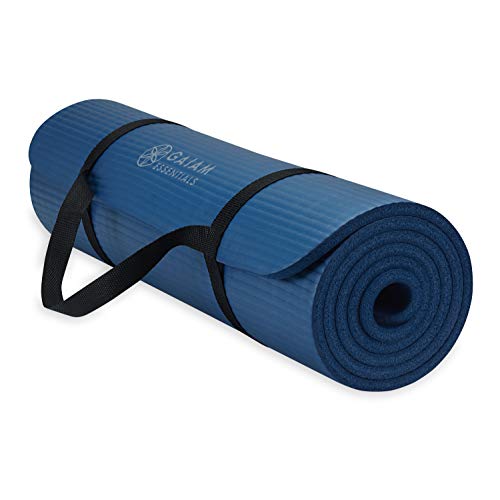
The Gaiam Essentials Thick Yoga Mat serves the comfort end of home practice. At ten millimeters of foam cushion with a carrying strap, it is designed for gentle yoga, stretching, Pilates style floor work, and restorative sessions where knees, elbows, and hips spend long periods in contact with the floor. For beginners building a habit at home, that comfort can be the difference between practicing and postponing.
Thickness changes balance. A very thick, softer mat compresses under standing feet, so single-leg balances and firm standing transitions feel less stable than on a dense five millimeter mat. That is not a flaw when the routine is mostly seated, supine, and kneeling work. It becomes a mismatch when a practitioner progresses toward faster flows and expects the same mat to provide a firm, unmoving base for every standing sequence at home.
Choose the Gaiam Essentials Thick as a starter or comfort mat, especially on hard floors and for joint-sensitive floor routines. Keep expectations aligned with its purpose, store it rolled with the strap, and consider a denser second mat later if practice style changes. As a first home mat for gentle routines, its cushion and simplicity make starting easy and repeatable.
Gaiam Premium Print Extra Thick Yoga Mat

The Gaiam Premium Print Extra Thick Yoga Mat sits between a basic starter mat and a specialist performance mat. At six millimeters, it offers more cushion than a standard thin mat while staying lighter and easier to move around a home than the densest options here. The textured surface aims to reduce slipping during everyday yoga, Pilates, and floor exercise, and the printed designs let a home practice corner feel personal without extra decor.
PVC construction keeps cleaning simple and the mat easy to wipe after a session, which suits shared living spaces where a mat may be rolled out in a family room and stored soon after. The extra thickness helps during kneeling and seated work on hard floors, while the firmer feel compared with a ten millimeter foam mat keeps standing poses more manageable for a general home routine across the week.
This Gaiam suits a practitioner who wants one approachable mat for mixed home use rather than a specialist for heat, maximum grip, or lifetime density. Check length against height before ordering, because taller practitioners benefit from a longer mat in extended poses. For balanced, easygoing practice, it covers the middle ground well.
How to choose
Start with thickness and density together, not thickness alone. Around four to five millimeters of dense material suits most standing and flowing practice, giving grip and stability with enough cushion for knees. Around six millimeters adds comfort on hard floors. Ten millimeters and softer foam suit gentle, floor-based routines, but standing balance will feel less certain, so match the mat to the poses that fill most of the practice time.
Next, judge grip by material. Natural rubber offers the strongest hold for bare hands and feet and suits slower, grip-dependent practice. Performance surfaces designed for sweat suit faster flows in warm rooms. PVC mats vary, with dense models favoring durability and easy cleaning. Consider the home floor as well. A mat that grips the body but slides on polished wood still fails, so check that the underside holds on the actual surface used at home.
Finally, measure length, width, and storage. Taller practitioners should look for longer mats so heels and head stay on the surface in extended poses. Wider mats help broader shoulders and restorative setups. A heavy mat is fine in a dedicated corner and frustrating in a small apartment where it must move daily. The right mat fits the body, the floor, and the room, not only the practice style written on a wish list.
Who should skip
Skip natural rubber mats if a latex allergy is present or suspected, and skip any mat whose material cannot be confirmed before ordering. Comfort and grip never justify an allergic risk in a product pressed against skin for a full practice. Choose a PVC or foam option from this guide instead, and confirm material details on the current listing before buying for anyone else in the household.
Skip very thick foam mats for a practice built around standing balances, fast transitions, or precise foot placement. The cushion that helps knees will work against stability, and frustration tends to end home routines. Also skip heavy premium mats if storage requires carrying the mat up stairs or between rooms daily. A lighter mat that gets unrolled is always better than a superior mat that stays in a closet.
FAQ
What thickness is best for home yoga?
A dense mat around five millimeters suits most home practice because it balances cushion for knees with stability for standing poses. Thicker mats help gentle and restorative routines on hard floors, while thinner firm mats suit advanced balance work. Judge density alongside thickness, since a soft thick mat and a firm thick mat behave very differently under body weight.
How should a yoga mat be cleaned at home?
Follow the maker guidance for the specific material. Most mats benefit from a gentle wipe or spray clean after sweaty sessions and a fuller clean on a regular schedule, followed by complete air drying before rolling. Natural rubber needs gentler products and no prolonged sun exposure, while closed-cell PVC tolerates simple wiping well. Never store a damp mat rolled tightly.
Does a yoga mat work on carpet?
A firmer, denser mat works better on carpet because it spreads weight and resists bunching. Very soft or thin mats can wrinkle and shift on deep pile, which disrupts standing poses. Placing a mat on low pile carpet or on a hard floor section gives the most stable base. If a mat moves during practice, change the surface before blaming grip alone.
When should a home yoga mat be replaced?
Replace a mat when the surface flakes, cracks, loses grip after cleaning, or compresses permanently in the areas under hands and feet. A mat that slides on the floor or no longer cushions joints has stopped doing its job. Regular cleaning and dry, shaded storage extend life, but heavy daily practice will wear any material over time with steady use.
Final verdict
For a permanent home corner and maximum density, the Manduka PRO leads this guide, while the Manduka GRP Adapt serves active, grip-focused flows. The JadeYoga Harmony is the natural rubber choice for grounded practice, the Gaiam Essentials Thick comforts gentle floor routines, and the Gaiam Premium Print covers mixed home use. Match thickness to poses and material to grip, and practice becomes easier to sustain.
FAQ
What thickness is best for home yoga?
How should a yoga mat be cleaned at home?
Does a yoga mat work on carpet?
When should a home yoga mat be replaced?
More from Amazon
Programs that pair well with the guide above. Offers and eligibility are set by Amazon and may change.
Free shipping on eligible items, Prime Video and more. Eligible new members can start with a free trial.
Start a Prime free trialAudiobooks and podcasts to listen to on the go. Eligible new members can start with a free trial.
Try Audible freeAd-free music streaming. Eligible new subscribers can start with a free trial.
Try Music Unlimited freeA free business account with business pricing and bulk-buying tools for work, shop or home office.
Create a business accountAs an Amazon Associate we earn from qualifying purchases.




Write Your Review
No reviews yet. Be the first to share your experience!