
Key takeaways
- Learn how to choose a quiet bedroom air purifier, compare HEPA models on noise, room size and filters, and sleep with cleaner air every night.
A bedroom air purifier has a harder job than a living room model. It needs to clean the air through the night without becoming the loudest object in the room, and it needs to do that work on a low setting, because few people sleep well next to a fan running at full speed. Bright display lights, rattling housings, and filters that are costly to replace can turn a sensible purchase into a quiet source of frustration.
The useful way to shop is to start with sleep, then size, then filtration. Noise on the lowest setting matters more than a headline coverage figure measured at top speed. Room size should be matched with some headroom, so the purifier can run slowly and still move enough air. This guide explains those trade-offs and compares five real HEPA models that suit bedrooms of different sizes and habits.
As an Amazon Associate, we earn from qualifying purchases.
Quick answer
Choose a purifier rated for a room larger than the bedroom, then run it on its sleep or lowest setting overnight. Prioritize a true HEPA or HEPA-grade filter, a display that turns off, and a published low noise level. Size up for pets, open doors, or high ceilings rather than relying on turbo speed at night.
LEVOIT Core 300 Air Purifier

The LEVOIT Core 300 is the simple, non-smart starting point in this group. It uses a three-in-one filter that combines a pre-filter, a HEPA-grade main filter, and activated carbon for everyday odors. The cylindrical shape pulls air from all sides, which makes placement easier in a bedroom corner or beside a dresser where one flat side may sit close to a wall.
Sleep mode is the reason this model belongs in a bedroom guide. The listing describes noise dropping to a near-silent level in sleep mode, and the controls stay manual and predictable. There is no app to configure and no network setup to maintain. For a guest room, a child’s room with adult supervision of settings, or anyone who prefers physical controls, that simplicity is a genuine advantage.
The trade-off is coverage and automation. The Core 300 suits small to medium bedrooms best, and it will not adjust itself when air quality changes. Running it on a higher setting before bedtime, then dropping to sleep mode, is a practical routine. Replacement filters are widely listed, which helps long-term ownership stay straightforward and predictable.
LEVOIT Core 300S Air Purifier
The LEVOIT Core 300S builds on the same compact idea with smart controls, an air quality sensor, and auto mode. During the day, auto mode can raise fan speed when dust or cooking air drifts into the bedroom, then settle back down. At night, sleep mode dims the display and lowers noise, addressing the two complaints that most often lead owners to unplug a bedroom purifier.
App and voice control sound like extras, but in a bedroom they have a specific use. Schedules can start purification before bedtime, and the unit can be adjusted without getting up or lighting a phone screen at full brightness. The sensor display also gives a visible cue that opening windows, vacuuming, or changing bedding has stirred particles into the air.
Choose the 300S over the standard Core 300 when automation will actually be used. Choose the simpler model when a network connection adds no value. Filter planning stays similar across both, so the decision is mostly about controls, sensing, and how much the purifier should manage on its own while the room is occupied or empty.
BLUEAIR Blue Pure 311i Max Air Purifier
The BLUEAIR Blue Pure 311i Max suits larger bedrooms and primary suites where a compact purifier would need to run too hard. Its HEPASilent approach combines filtration with electrostatic charging of particles, a design the brand positions for strong cleaning with lower noise and lower energy use than filtration alone. The fabric pre-filter is a visible design element and can be vacuumed as part of routine care.
Smart features include app control, auto mode, and a night mode intended to dim lights and quiet operation. The taller body moves more air than the smallest models here, so a bedroom that doubles as a home office, or a suite with a sitting area, is a better match than a tiny spare room where the footprint may feel oversized beside the bed.
The Blue Pure 311i Max also changes the look of the category. The soft pre-filter cover reads more like a household object than an appliance, which matters in a minimalist bedroom. Running costs should still be checked before buying, including replacement filter format and how often the pre-filter needs cleaning in a home with pets or dusty roads nearby.
WINIX 5500-2 Air Purifier

The WINIX 5500-2 is the odor-focused option in this lineup. Alongside true HEPA filtration, it uses a washable carbon filter aimed at household odors and a PlasmaWave feature that can be switched on or off. For bedrooms affected by cooking smells, a nearby bathroom, pets sleeping in the room, or a closet of stored clothing, stronger odor handling can matter as much as particle removal.
The tower format includes an air quality indicator, auto mode, and a sleep mode that dims lights and reduces fan noise. Its rated coverage reaches well beyond a typical bedroom, which supports the central advice of this guide. A larger purifier running slowly is usually easier to sleep beside than a small purifier straining at a higher setting in the same room.
Size is the main consideration. The Winix needs floor space and clearance around its intake and outlet, so a cramped bedroom with narrow gaps beside furniture may suit a compact cylinder better. Some owners also prefer to leave PlasmaWave off, so the ability to disable it is important. For a larger bedroom with odor concerns, the 5500-2 remains a balanced, established choice.
Coway Airmega Mighty AP-1512HH Air Purifier
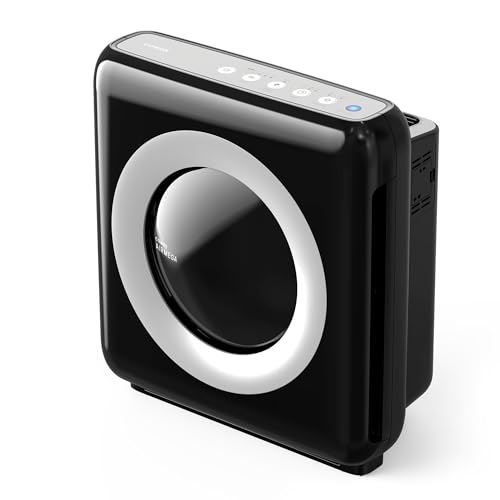
The Coway Airmega Mighty AP-1512HH is a long-running bedroom and apartment favorite built around four-stage filtration, an air quality indicator, auto mode, and an eco mode that stops the fan when the air stays clean for a period. That eco behavior suits bedrooms because the purifier can respond when needed and rest when the room is settled, rather than running at one fixed pace all night.
The pollution sensor gives clear feedback through a color indicator, and the timer settings support simple routines such as running the unit through the evening and early night. Filter replacement indicators remove guesswork, which helps owners who otherwise forget maintenance until performance drops. The Mighty covers a medium room comfortably, giving a standard bedroom useful headroom on lower speeds.
Its design is more appliance-like than the Blueair, and the control layout reflects an earlier generation of purifiers. Buyers who want the newest app experience may look elsewhere. Buyers who want a proven HEPA unit with automatic and eco behavior, clear indicators, and a footprint that still fits beside a nightstand or dresser will find the Mighty easy to justify for nightly use.
How to choose
Match size with headroom. A purifier cleans best when it can exchange the room air several times an hour, but headline coverage is usually calculated at top speed. For sleep, choose a model rated above the bedroom size, then use a low setting overnight and a higher setting for an hour before bed. High ceilings, open doors, and pets in the room all argue for sizing up.
Check noise in the right way. Compare the lowest or sleep setting rather than the maximum, and look for a display that can dim or switch off. A purifier placed too close to the bed will sound louder than the same unit across the room, so plan placement with clearance around intakes and a stable, hard surface that will not amplify vibration through the floor or furniture.
Then review filtration and upkeep. True HEPA or clearly described HEPA-grade filtration handles fine particles such as pollen and dust. Activated carbon helps with odors but varies widely in amount and quality. Confirm replacement filter availability, replacement interval, and whether a washable pre-filter is included. A quiet purifier that becomes expensive or difficult to maintain often ends up switched off, which helps nobody.
Who should skip
Skip a bedroom purifier if the main problem is humidity, mold growth on walls, or a pollutant source that should be removed rather than filtered. A purifier can reduce airborne particles, but it does not fix a leak, dry a damp room, or replace ventilation. Address the source first, especially where visible mold or persistent musty odor suggests a building issue behind the air problem.
Also skip the smallest desktop models for a full bedroom. A tiny unit may be fine on a desk, yet lack the airflow to clean a sleeping space on a quiet setting. Finally, skip smart models if app accounts and network setup will prevent consistent use. A simple purifier that runs every night on a manual sleep setting is better than a connected model left idle after a frustrating setup.
FAQ
Should a bedroom air purifier run all night?
For most owners, yes. Running through the night keeps particle levels steadier while bedding, carpets, and clothing release dust into the air. Use sleep mode overnight and a higher setting before bedtime if the room needs a faster clean. Follow the manufacturer guidance for placement and filter changes to keep performance consistent.
Where should a purifier sit in a bedroom?
Place the purifier on a stable floor surface with clear space around the intake and outlet, away from walls and curtains that block airflow. A spot near the bed but not directly beside the pillow usually balances clean air delivery with lower perceived noise. Avoid enclosing a purifier inside a cabinet or behind heavy furniture.
Is true HEPA necessary for a bedroom?
True HEPA offers a clear filtration standard for fine particles and is the safest choice for pollen, dust, and pet dander concerns. Some HEPA-grade or HEPASilent systems publish their own performance claims and can also suit bedrooms. Compare room coverage, noise on low settings, and filter availability rather than relying on a label alone.
How often do bedroom purifier filters need replacing?
Intervals vary by model, room dust, pets, and hours of use. Many main filters fall in a six to twelve month rhythm, while pre-filters need vacuuming or washing far more often. Use the filter indicator as a prompt, inspect the pre-filter monthly, and order replacements before the old filter reaches the end of its stated life.
Final verdict
For a small bedroom and simple controls, the LEVOIT Core 300 covers the basics well, and the Core 300S adds sensing and schedules for owners who will use them. The BLUEAIR Blue Pure 311i Max fits larger, design-conscious rooms, the WINIX 5500-2 leads on odor handling with room to spare, and the Coway Mighty remains the steady automatic choice. The best bedroom purifier is the one sized generously enough to stay quiet, dark, and running every night without becoming another chore.
FAQ
Should a bedroom air purifier run all night?
Where should a purifier sit in a bedroom?
Is true HEPA necessary for a bedroom?
How often do bedroom purifier filters need replacing?
More from Amazon
Programs that pair well with the guide above. Offers and eligibility are set by Amazon and may change.
Free shipping on eligible items, Prime Video and more. Eligible new members can start with a free trial.
Start a Prime free trialAudiobooks and podcasts to listen to on the go. Eligible new members can start with a free trial.
Try Audible freeAd-free music streaming. Eligible new subscribers can start with a free trial.
Try Music Unlimited freeA free business account with business pricing and bulk-buying tools for work, shop or home office.
Create a business accountAs an Amazon Associate we earn from qualifying purchases.




Write Your Review
No reviews yet. Be the first to share your experience!