
Key takeaways
- Glass vs stainless steel electric kettles compared on taste, scale, durability and cleaning, with five real models for tea, coffee and daily use.
Glass and stainless steel electric kettles boil water at similar speeds, yet they create different daily experiences. Glass lets the water level, the rolling boil, and the first signs of limescale stay visible. Steel hides the water, shrugs off knocks, and often keeps an exterior cooler or a counter looking calmer. Neither material wins every round, and the right answer depends on water hardness, household habits, and how much temperature control actually matters.
This comparison uses five real models, two glass and three stainless steel, to make the trade-offs concrete. Taste and water contact come first for many buyers, followed by durability, cleaning, and heat retention. A minimalist kitchen adds one more test. The kettle stays on the counter, so its shape, finish, and footprint matter every day, not only during the few minutes when water is heating for tea, coffee, or cooking.
As an Amazon Associate, we earn from qualifying purchases.
Quick answer
Choose glass to see water level and scale early, and to keep the water path simple and visible. Choose stainless steel for durability, cooler double walls, and wider temperature control choices. Hard water favors glass for timely descaling. Busy family kitchens and careful pour-over routines usually favor steel models with presets or a gooseneck spout.
Hamilton Beach 1.7L Glass Electric Kettle 40864

The Hamilton Beach 40864 represents the classic glass case. Its borosilicate glass body, stainless steel heating plate, mesh filter, and blue indicator light cover the standard glass formula at a full family capacity. Water level markings are easy to read through the wall, and the boil itself is visible, which helps anyone filling for a specific number of cups rather than guessing behind steel.
Visibility changes maintenance behavior. Scale shows as a cloudy film or white flecks long before flakes reach a cup, so descaling tends to happen on time. The wide glass body also rinses clean without hidden corners, although glass still needs careful handling around sinks and stone counters. A glass kettle that chips or cracks is finished, while a dented steel kettle often keeps working.
This model is boil-only, which keeps the comparison honest. Glass does not prevent temperature control in general, but many simple glass kettles skip presets. Buyers who only boil for French press, instant foods, and black tea will not miss them. Buyers who rotate between green tea and pour-over coffee should look at the steel presets below before deciding that glass simplicity is enough.
COSORI Electric Kettle Glass 1.7L

The COSORI glass kettle builds its appeal around the water path. The listing emphasizes no plastic contact with water, a borosilicate glass body, a stainless steel filter and inner lid, and a wide opening for cleaning. For buyers whose main objection to older kettles is plastic touching hot water, that published path is easier to evaluate than a vague material claim spread across a mixed construction.
The wide mouth matters in daily use. A hand or brush reaches the base more easily than in a narrow kettle, so scale removal and drying are less awkward. The glass wall keeps fill level and boil progress visible, and the black or white trim options let the kettle sit quietly in a modern kitchen without a large block of brushed metal dominating the counter.
Like the Hamilton Beach, this COSORI is a straightforward boiling kettle rather than a temperature laboratory. That is enough for most tea and coffee routines that use fully boiled water. The remaining cautions are the usual glass ones. Set it down gently, keep it away from counter edges in a busy kitchen, and descale before buildup hardens. Treated with that care, the COSORI makes the strongest purity-focused glass argument here.
Cuisinart PerfecTemp CPK-17 Stainless Steel Kettle

The Cuisinart PerfecTemp CPK-17 is the steel answer for temperature control. Six preset temperatures cover delicate, green, white, oolong, French press, and boil settings, with a keep warm function and a memory feature that holds settings when the kettle is lifted briefly from its base. That range is difficult to match with a basic boil-only glass model and a separate thermometer.
Steel construction supports this feature set well. The body resists knocks, the brushed finish suits a wide range of kitchens, and the water window is small but present for fill checks. Scale, however, stays mostly hidden. Owners need a descaling routine based on time and water hardness rather than appearance, because the interior will not announce buildup the way a clear glass wall does during every single boil.
Choose the Cuisinart when drink variety drives the purchase. A household moving between green tea in the morning and French press coffee later gains real value from presets. A household that only boils water gains less, and pays in complexity for buttons that stay unused. Within this comparison, the CPK-17 is the clearest example of steel winning on control rather than on material alone.
COSORI Electric Gooseneck Kettle CO108-NK
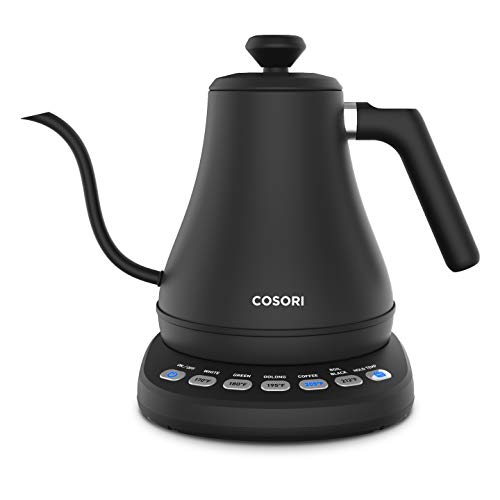
The COSORI Electric Gooseneck Kettle shifts the steel argument from presets alone to pouring control. Its stainless steel interior, lid, and bottom, five temperature presets, and long gooseneck spout are designed for pour-over coffee and careful tea brewing. The narrow spout slows and directs the stream, so water can circle grounds evenly instead of flooding the filter in one heavy pour from a wide kettle lip.
Capacity is smaller than the family jugs in this guide, which is a deliberate trade. A gooseneck kettle serves brewing sessions rather than repeated rounds for a full table. The matte black finish also suits a minimalist counter, and the counterbalanced handle design aims to keep the pour steady as the kettle empties and its weight shifts during a slow brew.
This model shows why material and shape should be judged together. Steel allows the slim, durable gooseneck form, and the presets support drinks that scorch or under-extract at the wrong temperature. It is less useful for boiling large volumes for pasta water or a big teapot. For a home coffee ritual, though, the COSORI gooseneck is the most specialized and satisfying tool in this five-model comparison.
Secura Stainless Steel Double Wall Electric Kettle

The Secura double wall kettle makes the durability and safety case for steel in its plainest form. Two stainless walls create an insulating layer, so the exterior stays cooler than a single-wall kettle while the water inside holds heat longer after boiling. The listing describes a fully stainless interior across the pot, lid, spout, and rim, which answers the same water contact question that draws many buyers toward glass.
There is no water window and no temperature preset system. Filling relies on interior markings and habit, and scale stays out of sight until performance or taste gives a clue. In exchange, the kettle tolerates the realities of a shared kitchen. It will not shatter if knocked, it presents a simple silhouette on the counter, and the cool-touch body is reassuring in homes where a kettle gets moved soon after boiling by different people.
The Secura suits buyers who boil water often, value a calm exterior, and do not need brewing presets. It also suits offices and family kitchens where glass feels like an unnecessary risk. Pair it with a calendar-based descaling habit, especially in hard water areas, and the hidden interior stops being a weakness and becomes a routine maintenance task.
How to choose
Judge the water path first. Glass makes contact materials and scale visible, while quality steel models publish stainless interiors that keep plastic away from hot water. Ask what the lid, filter, and spout are made from, not only the main body. A glass kettle with plastic in the pour path and a steel kettle with a stainless interior are closer in practice than their labels suggest at first glance.
Next, match control to drinks. Boil-only models serve black tea, French press, and cooking water well. Presets earn their place for green, white, and delicate teas, plus coffee methods that benefit from water below a rolling boil. A gooseneck earns its place only when pour control matters, because the smaller capacity and slower pour are drawbacks for general family use and quick refills.
Finally, weigh breakage against upkeep. Glass demands gentle handling and rewards owners with visible scale warnings. Steel tolerates knocks and busy counters, but needs scheduled descaling because buildup stays hidden. Hard water households should take that difference seriously. The best material is the one whose maintenance pattern fits real habits, not ideal intentions formed on the day of purchase.
Who should skip
Skip glass if a kettle will live in a crowded family kitchen, a workplace, or any space where it may be knocked against taps and stone counters by different users. The first serious chip ends the experiment, and replacement cost plus waste make steel the calmer long-term choice for rough handling and shared routines where nobody treats appliances gently.
Skip stainless steel if seeing the water is the main pleasure of the ritual, or if nobody will descale without a visual prompt. Hidden scale is the predictable failure mode of steel in hard water homes. Also skip preset steel models when only fully boiled water is ever needed. Extra controls add cost and cleaning crevices without adding value, and a simple glass kettle will feel more direct, honest, and satisfying every morning.
FAQ
Does water taste different from glass and steel kettles?
Most people notice a difference only when plastic parts, old scale, or detergent residue enter the water path. Glass and stainless steel are both neutral when clean. A kettle with a stainless or glass interior, a clean filter, and regular descaling should deliver neutral water regardless of the outer material chosen for the body.
Which material handles hard water better?
Glass makes hard water easier to manage because scale is visible early and descaling happens before buildup hardens. Steel handles the physical wear better, but scale hides inside. Hard water households choosing steel should descale on a fixed schedule based on local water and frequency of use rather than waiting for visible signs or slower boiling.
Are glass kettles fragile in normal use?
Borosilicate glass is designed for heat shock and everyday boiling, and many glass kettles serve for years. The risk is impact rather than heat. A knock against a tap, a drop into a sink, or a hard set-down on stone can crack glass that would only dent steel. Handling habits decide whether that risk matters.
Is temperature control worth choosing steel for?
Temperature control is worth it when drinks regularly include green tea, white tea, or pour-over coffee, where water that is too hot can harm flavor. Preset steel models and gooseneck designs are common in that role. For black tea, herbal infusions, and cooking water, a boil-only kettle in either material usually does the job well.
Final verdict
Glass wins on visibility, simple water paths, and honest maintenance signals, with the Hamilton Beach 40864 as the classic pick and the COSORI glass kettle as the no-plastic-contact pick. Steel wins on durability and control, from the Cuisinart presets to the COSORI gooseneck pour and the Secura cool double wall. Decide by routine rather than by material loyalty. A careful solo brewer and a busy family kitchen are solving different problems, and each material solves one of them better.
FAQ
Does water taste different from glass and steel kettles?
Which material handles hard water better?
Are glass kettles fragile in normal use?
Is temperature control worth choosing steel for?
More from Amazon
Programs that pair well with the guide above. Offers and eligibility are set by Amazon and may change.
Free shipping on eligible items, Prime Video and more. Eligible new members can start with a free trial.
Start a Prime free trialAudiobooks and podcasts to listen to on the go. Eligible new members can start with a free trial.
Try Audible freeAd-free music streaming. Eligible new subscribers can start with a free trial.
Try Music Unlimited freeA free business account with business pricing and bulk-buying tools for work, shop or home office.
Create a business accountAs an Amazon Associate we earn from qualifying purchases.





Write Your Review
No reviews yet. Be the first to share your experience!