
Key takeaways
- We compared ball bearing, concealed soft-close, T-strap and standard butt hinges to find the best door hinges for interior doors, cabinets and gates.
A door hinge is a small piece of hardware with an outsized job. It carries the full weight of the door, decides whether the door swings smoothly or drags, and determines whether the door closes quietly or announces itself every time someone passes through. The five designs below cover the main jobs in a home: a concealed soft-close hinge for cabinets, a T-strap hinge for shed and gate doors, two ball bearing butt hinges in different sizes, and a plain-bearing standard hinge for interior swaps.
Disclosure: As an Amazon Associate, I earn from qualifying purchases. If you buy through links in this article, I may earn a commission at no extra cost to you.
How to Choose the Best Door Hinges
Start by measuring the hinge you already have. Most US interior doors use a 3.5 inch by 3.5 inch leaf, while exterior and heavier doors usually take a 4 inch by 4 inch plate. Then check the corner shape: square corners fit a square routing, while 1/4 inch and 5/8 inch radius corners fit rounded mortises. A hinge of the wrong size or shape will not drop into the existing mortise.
Bearing type is the next decision. A plain-bearing butt hinge is two steel plates turning on a pin, with metal moving directly against metal. It is simple and fine for light interior doors that open a few times a day. A ball bearing hinge places a ring of small hardened balls between the knuckles, so the surfaces roll instead of scraping. That design runs quieter and carries more weight, which suits a busy door or a heavy solid-wood slab.
Count three hinges per door for anything beyond a light hollow-core slab, and check the screw-hole pattern when you replace hinges: an offset pattern can let you drill fresh pilot holes inside the same mortise when the old holes are stripped. Removable pins let you lift a door off the jamb for painting without unscrewing the plates, while non-removable pins keep an outward-opening exterior door from being lifted off its hinges from outside. Finally, decide whether the hinge should be seen at all. Concealed hinges hide inside the door and frame, which suits frameless cabinets, while strap and T-strap hinges mount on the face of the door and spread the load across a long plate, which is what a wide gate or shed door needs.
1. Blum 71B3580 CLIP Top BLUMOTION Soft-Close Concealed Hinge
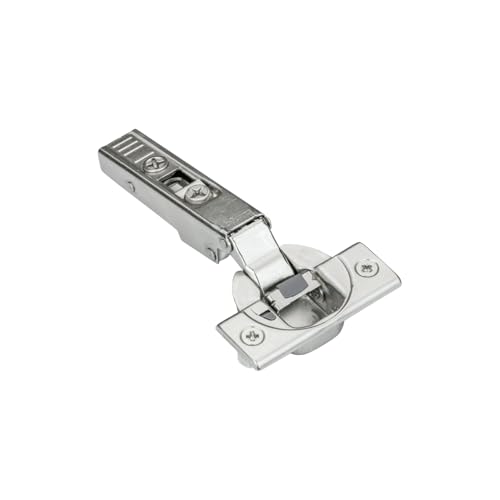
The Blum 71B3580 is the concealed pick in this guide, and it is built for cabinet doors rather than passage doors. It is a clip-top hinge with the BLUMOTION soft-close mechanism integrated directly into the hinge cup, so a pushed cabinet door slows itself down and closes without a slam. The listed opening angle is 110 degrees, and the hinge is self-closing with a full overlay layout, so the door sits in front of the cabinet frame and covers the opening edge to edge.
Installation is press-in, with dowels already attached, so the hinge seats into a 35 mm cup hole. The listed cup depth is 1/2 inch (13 mm), and the hinge suits door thicknesses up to 1 inch (26 mm). A deactivation switch lets you turn the soft-close action off for small or lighter doors, and an overload safety feature protects the mechanism if a door is forced. The hinge is nickel-plated metal and comes in a pack of 10, which covers a full kitchen run of single doors. A concealed hinge needs the cup hole drilled to the right depth, so it suits a new cabinet build more than a quick swap.
Specs
- Type: Concealed soft-close cabinet hinge, clip-top
- Opening angle: 110 degrees, self-closing, full overlay
- Cup depth: 13 mm, press-in with pre-attached dowels
- Door thickness: Up to 26 mm
- Finish: Nickel-plated metal
- Pack: 10 hinges
- Part number: 71B3580
2. HILLMASTER 6-Inch T-Strap Hinges

The HILLMASTER T-strap is the outdoor pick in this guide. It mounts on the face of the door with one long strap running across the door and a short leaf fixed to the post, which spreads the weight of a wide door over a much larger area than a butt hinge can. That layout keeps a shed door, a garden gate, or a barn door from sagging over time. Each strap measures 6 inches, and the hinge is made as wrought hardware with a black rustproof finish, so it is built for rain and humidity.
The listed uses cover shed doors, gates, wooden fences, yard doors, and barn doors, and the box holds six hinges with screws included, which is enough for two three-hinge doors or three two-hinge doors. The trade-off is appearance: a face-mounted strap is meant to be seen, so it suits rustic doors rather than a clean modern interior.
Specs
- Type: T-strap hinge, face-mounted
- Strap length: 6 inches
- Finish: Black, rustproof, wrought hardware
- Listed uses: Shed doors, gates, wooden fences, yard doors, barn doors
- Pack: 6 hinges with screws included
3. KOLET 4 x 4 Inches Ball Bearing Door Hinges

The KOLET is the heavy-door pick among the butt hinges here. Each plate measures 4 inches by 4 inches in heavy-duty stainless steel, with a choice of square or 5/8 inch radius corners to match the mortise. The ball bearings inside the knuckle are permanently lubricated, and the listed capacity is 110 pounds across three hinges, which covers a solid-wood or steel-clad door at the standard three-hinge spacing. The maker also lists more than 50,000 open-and-close cycles and a service life of more than 10 years.
The pins are non-removable, which is a security feature on an outward-opening door, since the door cannot be lifted off its hinges from outside. The same feature is a drawback on a door you expect to remove for painting. The plate is 2.5 mm thick, and the brushed nickel finish suits modern hardware. The box holds three hinges, which is exactly one door at the recommended spacing.
Specs
- Type: Ball bearing butt hinge
- Leaf size: 4 x 4 inches, square and 5/8 inch radius corner
- Material: Heavy-duty stainless steel, brushed nickel
- Listed capacity: 110 pounds across three hinges
- Listed cycles: More than 50,000 open-and-close cycles
- Pin: Non-removable
- Plate thickness: 2.5 mm
- Pack: 3 hinges
4. OMANSKO 6-Pack 3.5-Inch Oil Rubbed Bronze Door Hinges
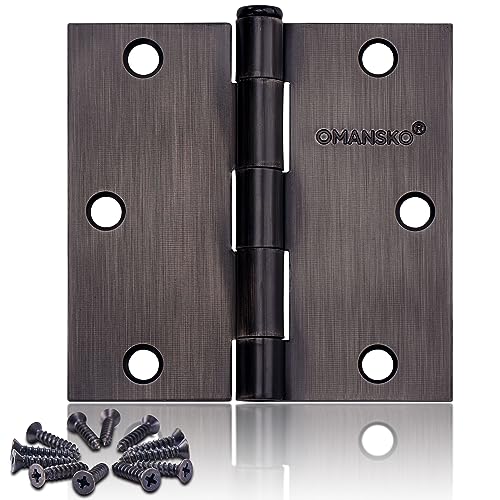
The OMANSKO six-pack is the whole-house pick. Six 3.5 inch by 3.5 inch hinges with square corners cover three doors at three hinges each, so one box refreshes a hallway of interior doors. The oil rubbed bronze finish reads near-black against white trim. The hinges are iron with a listed swing of 305 degrees, and the pins are detachable rivets, so you can lift a door off the jamb for paint touch-ups without unscrewing the plates.
Thirty-six one-inch screws come in the box, which is enough for all six hinges with no separate hardware run. The trade-off is the square corner: this hinge needs a square mortise, so it will not drop into a rounded jamb cutout without chiseling.
Specs
- Type: Ball bearing butt hinge
- Leaf size: 3.5 x 3.5 inches, square corners
- Material: Iron, oil rubbed bronze finish
- Swing: 305 degrees, detachable rivet pins
- Pack: 6 hinges with 36 one-inch screws
5. Amazon Basics Rounded 5/8-Inch Radius Interior Door Hinges
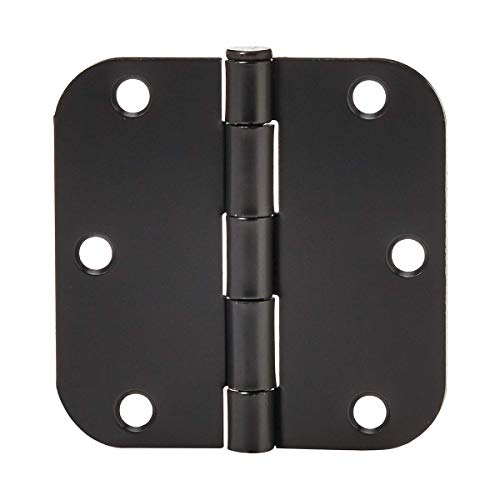
The Amazon Basics hinge is the plain-bearing standard in this guide, and its strength is coverage. The box holds 18 hinges in matte black with 5/8 inch radius corners, plus 108 screws, which is enough for six doors at three hinges each. Each plate measures 3.5 inches by 3.5 inches in steel, and the rounded corners suit the rounded mortises found on many modern interior doors. The construction is standard plain-bearing rather than ball bearing, which keeps the design simple.
That simplicity is also the limit. A plain-bearing hinge has metal turning directly on metal, so it is best on light to medium interior doors that open a few times a day. On a heavy solid door or a door that swings constantly, a ball bearing hinge will stay quieter for longer. The matte black finish is a safe match for dark hardware and modern trim, and the 18-pack format means you can keep spares on hand.
Specs
- Type: Standard plain-bearing butt hinge
- Leaf size: 3.5 x 3.5 inches, 5/8 inch radius corners
- Material: Steel, matte black finish
- Pack: 18 hinges with 108 screws
Comparison Table
| Hinge | Type | Leaf Size | Pack | Best For |
|---|---|---|---|---|
| Blum 71B3580 | Concealed soft-close | Cup mount, 110 degrees | 10 | Cabinet doors that should close quietly |
| HILLMASTER T-Strap | T-strap, face-mounted | 6 inch strap | 6 | Shed doors, gates, and barn doors |
| KOLET Ball Bearing | Ball bearing butt hinge | 4 x 4 inches | 3 | Heavy solid-wood or steel-clad doors |
| OMANSKO Oil Rubbed Bronze | Ball bearing butt hinge | 3.5 x 3.5 inches | 6 | Refreshing several interior doors at once |
| Amazon Basics Rounded | Standard plain-bearing butt hinge | 3.5 x 3.5 inches | 18 | Whole-house interior door swaps |
Frequently Asked Questions
How many hinges does a door need?
Three hinges per door is the standard for anything beyond a light hollow-core slab. Two hinges suit only a very light door. Spread them across the height of the door, with one near the top, one near the bottom, and one in the middle.
What is the difference between square and radius corner hinges?
The corner shape must match the mortise cut into the door and the jamb. A square corner hinge drops into a square routing, while a 5/8 inch radius corner hinge fits a mortise with rounded corners. Measure the existing hinge before ordering.
What hinge should I use for a gate or shed door?
Use a strap or T-strap hinge rather than a butt hinge. The long strap spreads the weight of a wide door across more of the door face, which keeps the door from sagging. Pick a rustproof finish, size the strap to the door width, and use three hinges on a full-height door.
Conclusion
The best door hinge is the one that matches the door it carries. For cabinet doors, the Blum 71B3580 hides the hardware and closes the door softly on its own. For shed and gate doors, the HILLMASTER T-strap spreads the load across a long plate and resists the weather. For a heavy door, the KOLET 4 inch ball bearing hinge carries the weight with non-removable pins for security. For standard interior doors, the OMANSKO six-pack covers three doors in one box, and the Amazon Basics 18-pack covers six. Measure the leaf, match the corner, and count three hinges per door.
FAQ
How many hinges does a door need?
What is the difference between square and radius corner hinges?
What hinge should I use for a gate or shed door?
More from Amazon
Programs that pair well with the guide above. Offers and eligibility are set by Amazon and may change.
Free shipping on eligible items, Prime Video and more. Eligible new members can start with a free trial.
Start a Prime free trialAudiobooks and podcasts to listen to on the go. Eligible new members can start with a free trial.
Try Audible freeAd-free music streaming. Eligible new subscribers can start with a free trial.
Try Music Unlimited freeA free business account with business pricing and bulk-buying tools for work, shop or home office.
Create a business accountAs an Amazon Associate we earn from qualifying purchases.
Write Your Review
No reviews yet. Be the first to share your experience!