
Key takeaways
- Compare the best dish brushes for everyday kitchen cleaning, from soap-dispensing and steel brushes to a bamboo set, with tips for choosing the right one.
A dish brush is a small tool with a big job. It scrubs plates, glasses, pots, and pans every day, and the right one makes that routine faster and less messy. Firm bristles cut through stuck food without scratching cookware, while a comfortable handle keeps hands away from hot water and sharp edges. The wrong brush sheds bristles, holds odors, or wears out in a few weeks, so the choice matters more than it seems.
This guide covers five dish brushes sold on Amazon, from a classic nylon brush and a soap-dispensing model to a steel-handled brush, a sink-edge design, and a bamboo set. Each one suits a different kitchen habit, whether you wash a few dishes by hand each night or tackle large pots after family dinners. Read on to find the brush that fits your sink, your cookware, and your cleaning routine.
As an Amazon Associate, we earn from qualifying purchases.
Quick Answer
For most kitchens, the OXO Good Grips Dish Brush is the best all-around pick, with firm nylon bristles, a built-in scraper, and a non-slip handle. The soap-dispensing OXO suits cooks who want suds on demand, the steel OXO suits heavy pots, the Joseph Joseph Edge suits small sinks, and the VALENTISE bamboo set suits households that prefer natural materials.
OXO Good Grips Dish Brush

The OXO Good Grips Dish Brush is the straightforward pick that most kitchens need, and it earns its place through simple, well-thought-out design. The nylon bristles are firm enough to lift dried food from plates and bowls, yet gentle enough for non-stick cookware, so one brush can handle most of the sink. A built-in scraper on the head takes care of stuck-on spots without reaching for a second tool, and the soft, non-slip handle stays comfortable during longer washing sessions.
Care is easy, which matters for a tool that lives in a damp sink. The brush is dishwasher safe, so it can go through a cleaning cycle along with the dishes, and the bristles dry quickly between uses. The handle has a hole for hanging, keeping the brush off the counter and out of standing water. For households that want one reliable brush without extra features, this is the model to start with.
OXO Good Grips Soap Dispensing Dish Brush

The OXO Good Grips Soap Dispensing Dish Brush moves the soap bottle into the handle, which suits cooks who like suds on demand. A push button releases dish soap onto the bristles, so there is no need to set down a plate, reach for the bottle, and pick the plate up again. The clear reservoir shows how much soap is left at a glance, and it refills easily from a standard bottle of dish soap.
The brush head uses the same durable nylon bristles as the classic OXO brush, with a built-in scraper for stuck food, and it is safe for non-stick cookware. The non-slip grip stays secure with wet hands, and the whole brush is dishwasher safe for regular cleaning. This is the pick for busy kitchens where dishes pile up fast and every saved step counts.
OXO Steel Dish Brush

The OXO Steel Dish Brush brings a sturdier feel to the sink, with a stainless steel handle that suits households that wear out plastic-handled brushes. The metal handle resists cracking and bending, and it has a comfortable weight that helps the bristles press into baked-on food on sheet pans and roasting dishes. A hanging hole at the end keeps it stored neatly beside the sink.
The brush head uses firm nylon bristles that clean without scratching, plus a scraper for stubborn spots, and the brush is dishwasher safe. Steel handles do not absorb odors the way some plastics can, which keeps the brush fresher over time. This is the best choice for cooks who scrub heavy pots and pans daily and want a brush built to last through that work.
Joseph Joseph Edge Dish Brush
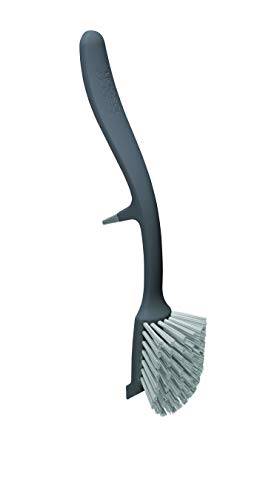
The Joseph Joseph Edge Dish Brush solves a small but persistent kitchen annoyance: where to put a wet brush between uses. Its handle has an integrated rest that hooks over the edge of the sink, holding the brush head above the basin so water drains away and the bristles dry instead of sitting in a puddle. That simple detail keeps the sink area tidier and helps the brush last longer.
The brush itself is compact, with stiff bristles that handle plates, bowls, and glasses, and a slim profile that fits into mugs and narrow containers. The grey finish suits modern kitchens, and the design works with most standard sinks. This is the pick for small kitchens and renters who want a brush that stores itself neatly without a separate holder or caddy.
VALENTISE Bamboo Dish Brush Set
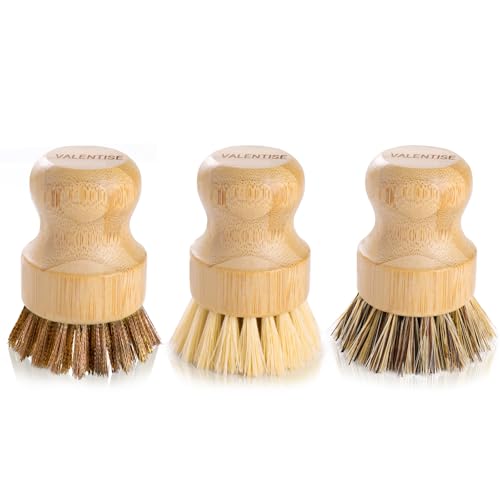
The VALENTISE Bamboo Dish Brush Set is the natural-materials option in this guide, and it covers more jobs than a single brush. The three-piece set includes a sisal brush for dishes and vegetables, a palm-fiber brush for pots and pans, and a brass brush for ovens and grills. Bamboo handles feel warm in the hand and keep plastic out of the sink, which suits households moving toward lower-waste kitchens.
Each brush has a distinct job, so the set replaces several single-purpose tools. The sisal brush is gentle enough for produce and everyday dishes, the palm brush is firmer for cookware, and the brass brush tackles baked-on residue on oven racks and grills. The brushes hang by their handles and dry quickly. This set is the best choice for cooks who want a complete, plastic-free scrubbing kit rather than one brush.
How to Choose
Start with the material of your cookware. Nylon bristles suit non-stick pans and everyday dishes, while firmer fibers and brass suit cast iron, steel, and grill grates. If you wash mostly delicate glassware, choose softer bristles and a slim head that reaches inside narrow glasses. Households with heavy roasting pans and sheet pans benefit from a sturdier handle and a built-in scraper.
Next, think about how the brush will be stored. A brush that sits in standing water grows odors and wears out faster, so look for a hanging hole, a sink-edge rest, or a holder. Soap-dispensing brushes save steps for large loads but need refilling, so they suit cooks who wash in batches. Finally, check that the brush is dishwasher safe, since a regular trip through the dishwasher keeps bristles clean and extends the life of the tool.
Who Should Skip
A dish brush is not the right tool for every kitchen. Households that run a dishwasher for nearly every load may only need a brush for the occasional pot or pan, so a single basic model is enough and a full set would go unused. People who prefer sponges for delicate glassware may also find a brush too stiff, though a soft-bristled model can bridge that gap.
Households with very limited sink space should skip bulky sets and soap-dispensing models with wide reservoirs, since they crowd the counter. If anyone in the home has a sensitivity to natural fibers or a latex allergy, check the brush materials first, since some bamboo and fiber brushes use natural latex in their construction. For those kitchens, a simple nylon brush with a plastic or steel handle is the safer pick.
FAQ
How often should I replace a dish brush?
Most dish brushes last one to three months with daily use. Replace the brush when bristles splay, bend, or fall out, or when it keeps an odor after washing. Running the brush through the dishwasher regularly helps it last longer, but worn bristles clean poorly no matter how often they are washed.
Are dish brushes better than sponges?
Brushes dry faster than sponges, which means they harbor fewer odors and less buildup between uses. Sponges conform to odd shapes, while brushes reach into bottles and scrub stuck food more effectively. Many kitchens keep both, using the brush for pots and pans and a sponge for delicate items.
Can I use a dish brush on non-stick cookware?
Yes, as long as the bristles are nylon or another soft material. Nylon bristles clean non-stick surfaces without scratching the coating. Avoid brass or wire brushes on non-stick pans, and reserve those for cast iron, steel, and grill grates where a tougher scrub is safe.
How do I keep a dish brush clean?
Rinse it well after every use and store it bristle-up or hanging so it dries fully. Run it through the dishwasher once a week if it is dishwasher safe. For bamboo and natural-fiber brushes, shake out excess water and hang them in a ventilated spot, since natural fibers take longer to dry than nylon.
Final Verdict
The OXO Good Grips Dish Brush is the best all-around pick for everyday kitchen cleaning, with firm nylon bristles, a built-in scraper, and a comfortable non-slip handle. Cooks who want soap on demand should choose the OXO soap-dispensing model, while heavy scrubbers will get more life from the OXO steel version. Small sinks suit the Joseph Joseph Edge, and the VALENTISE bamboo set is the best choice for households that prefer natural materials and a complete scrubbing kit.
FAQ
How often should I replace a dish brush?
Are dish brushes better than sponges?
Can I use a dish brush on non-stick cookware?
How do I keep a dish brush clean?
More from Amazon
Programs that pair well with the guide above. Offers and eligibility are set by Amazon and may change.
Free shipping on eligible items, Prime Video and more. Eligible new members can start with a free trial.
Start a Prime free trialAudiobooks and podcasts to listen to on the go. Eligible new members can start with a free trial.
Try Audible freeAd-free music streaming. Eligible new subscribers can start with a free trial.
Try Music Unlimited freeA free business account with business pricing and bulk-buying tools for work, shop or home office.
Create a business accountAs an Amazon Associate we earn from qualifying purchases.





Write Your Review
No reviews yet. Be the first to share your experience!