
Key takeaways
- Compare the best microphone cases for musicians, from hard-shell molded cases to padded bags that protect mics, cables and clips on the road.
A microphone case does more than carry a mic. It shields a delicate capsule, a thin grille, and a fragile connector from knocks, dust, and damp air in a rehearsal room, or a crowded backstage corner. The right case keeps each mic in its own pocket, holds cables and clips close, and makes load-in faster because nothing rattles loose or goes missing. Choose poorly, and the case becomes dead weight that stays home while the mic travels unprotected in a gear bag.
This guide compares five cases that fit different rigs, from a hard-shell system case for a full wireless setup to a waterproof twelve-mic case for a choir or a band, a padded six-mic bag for weekly rehearsals, a compact four-slot organizer for handheld wireless mics, and a customizable foam case for a single mic plus small accessories. Each pick earned its place through an Amazon listing with a named model, so you can match the case to your mics, your routine, and the way you travel.
Quick Picks
As an Amazon Associate we earn from qualifying purchases
| Product | Best for | Key spec from title |
|---|---|---|
| CASEMATIX Wireless Microphone System Hard Case | A full wireless system in one box | Hard shell with foam for receiver and mics |
| SKB iSeries 12-Mic Case | Twelve wired mics and wet weather | Waterproof molded shell with 12 foam slots |
| On-Stage MB7006 6-Space Microphone Bag | Six mics in a light padded bag | Six padded spaces in a 16 x 9 x 12 in bag |
| MRINCA 4-Slot Wireless Microphone Case | Four handheld wireless mics plus cables | Double-layer nylon organizer with 4 slots |
| CASEMATIX 12″ Customizable Foam Case | One mic and small accessories | Pre-diced foam in an 11 x 7.25 x 2.75 in shell |
How to Choose
Match the case to the mic count
Count the mics you carry on a normal night, then add one spare slot for the mic you borrow or the one you buy next month. A single-mic foam case suits a solo singer, while a six-space bag covers a small band and a twelve-slot case serves a choir, a school, or a venue with a house mic locker. Wireless systems need room for a receiver and body packs as well as handheld mics, so a case built for wired mics alone will leave the receiver riding loose in a side pocket. Buy for the rig you own today plus one extra slot, and the case stays useful as the collection grows.
Hard shell or padded bag
A hard shell wins when the case rides in a van under amps, flight cases, and cable trunks, or when it flies as checked luggage. Molded plastic and waterproof gaskets shrug off rain and hard knocks, and pre-cut foam holds each mic in a fixed pocket so nothing shifts on a rough road. A padded bag wins when weight matters more than crush protection, since soft sides and shoulder straps make a six-mic load easy to carry up stairs and across a parking lot. Bags also flex around odd shapes, like a receiver with antennas or a mic with a bulky clip attached. Pick the shell for rough transport and the bag for light, frequent carries.
Measure before you order
Mic cases fail most often on fit, not on build. A handheld vocal mic runs about 18 to 20 cm long, and a tall condenser or a mic with a long handle can outgrow a shallow drop by a centimeter or two. Measure each mic end to end, including the connector and any clip that stays attached, then compare that length with the interior depth on the listing. Check the width too, since wide grilles and fat bodies need wider slots than slim handhelds. For a wireless system, measure the receiver, the body packs, and the handhelds together, because a case that swallows the mics may still leave the receiver homeless. A tape measure now saves a return later.
Think about cables, clips, and travel
A case that holds mics but ignores the rest of the kit sends you back to the car for a second bag. Look for a lid pocket, a mesh pouch, or a second layer that takes XLR cables, mic clips, batteries, and a spare windscreen without crushing the mics below. A handle that locks, latches that stay shut in transit, and a shoulder strap all matter when the case travels by hand through a venue. Weight counts too: a heavy molded case protects well, but a loaded twelve-mic shell can tire an arm on a long walk from the parking lot. Match the carry style to the distance you walk most nights.
The 5 Best Options
CASEMATIX Wireless Microphone System Hard Case

This hard case is built around a complete wireless rig rather than a single mic. The molded shell and foam interior cradle a receiver, body packs, and handheld mics in fixed pockets, so the whole system travels as one unit and sets up fast at the venue. At 16 by 13 by 6 inches it fits a standard half-rack receiver with room for handhelds and small accessories, and the rigid shell guards the gear against knocks in a loaded van. Singers and small bands who run one wireless system will find it covers the full kit without a second bag.
Specs
- Dimensions: 16 x 13 x 6 in (40.64 x 33.02 x 15.24 cm)
- Weight: 2.5 lb (1.13 kg)
- Material: Plastic hard shell with foam interior
- Model: HRDCS-LK-FM-15114-MICSYSTEM
- Fits Sennheiser, Shure, Audio-Technica, Nady, VocoPro, and AKG wireless systems
Best for: A singer or small band carrying one full wireless system to gigs.
Watch out for: Measure the receiver and handhelds against the 16 x 13 x 6 in interior first, since the foam pockets are pre-shaped and an oversized receiver may sit proud of the lid.
SKB iSeries 12-Mic Case

This molded case holds a dozen handheld mics in vertical foam slots, which suits choirs, schools, churches, and venues that keep a house mic locker. The iSeries shell is injection-molded polypropylene with a gasketed seal, so rain on the walk from the van and damp storage rooms stop at the lid. At 22 by 14 by 9 inches outside and 8.89 lb empty, it is a serious box that stacks well and survives rough handling, though a full load gets heavy on a long carry. The pre-cut foam keeps each mic apart and stops the tangle of grilles knocking together in transit.
Specs
- Exterior: 22 x 14 x 9 in
- Weight: 8.89 lb
- Capacity: 12 microphones stored vertically
- Shell: Ultra-high-strength polypropylene copolymer resin
- Design: Gasketed, waterproof and airtight, submersible
- Interior: Pre-cut foam with 12 mic slots
Best for: Choirs, schools, and venues that store a dozen wired mics in one locker.
Watch out for: Long handheld mics near 20 cm close snugly against the lid, so measure tall mics first, and expect a heavy carry once all twelve slots are filled.
On-Stage MB7006 6-Space Microphone Bag

This padded bag takes six mics in individual spaces and carries them on a shoulder strap, which fits a weekly rehearsal routine better than a hard shell. At 16 by 9 by 12 inches and 2 lb, it stays light enough to sling over a shoulder while the other hand carries a guitar or a stand, and the soft sides flex around mics with clips still attached. The bag suits bands that set up and tear down in the same room every week, where the case rides in a car rather than under a pile of flight cases. Six spaces cover most small lineups without wasted room.
Specs
- Dimensions: 16 x 9 x 12 in
- Weight: 2 lb
- Capacity: 6 standard or wireless handheld microphones
- Materials: Nylon and foam
- Color: Black
- Interior: Thick foam inserts, separate compartment with removable hook-and-loop divider for cables and clips
- Storage: Zippered mesh pocket in the lid
- Carry: Carry handles and adjustable shoulder strap
Best for: Bands that rehearse weekly and carry six mics by hand.
Watch out for: Soft sides give less crush protection than a molded shell, so avoid stacking heavy gear on top of the bag in a loaded van.
MRINCA 4-Slot Wireless Microphone Case

This nylon organizer holds four handheld wireless mics in padded slots and adds a second layer for a receiver and cables, so a small wireless kit travels in one bag. The double-layer layout keeps the receiver apart from the mics, which stops connectors and antennas from pressing against grilles on the move. Black-orange nylon keeps the bag light and easy to spot in a pile of black gear, and the solid pattern hides scuffs from regular use. It suits karaoke hosts, small venues, and presenters who run a handful of handheld wireless mics and want the receiver in the same bag.
Specs
- Capacity: 4 microphone slots
- Material: Nylon
- Color: Black orange
- Layout: Double-layer organizer with space for receiver and cables
- Compatible with JBL Partybox, Shure, Phenyx Pro, and TONOR handheld microphone systems
Best for: Karaoke hosts and presenters carrying four handheld wireless mics plus a receiver.
Watch out for: The soft nylon shell gives no rigid crush protection, and the listing shows no interior dimensions, so measure handheld mics and the receiver against the slots before ordering, and confirm availability on the listing first.
CASEMATIX 12″ Customizable Foam Case
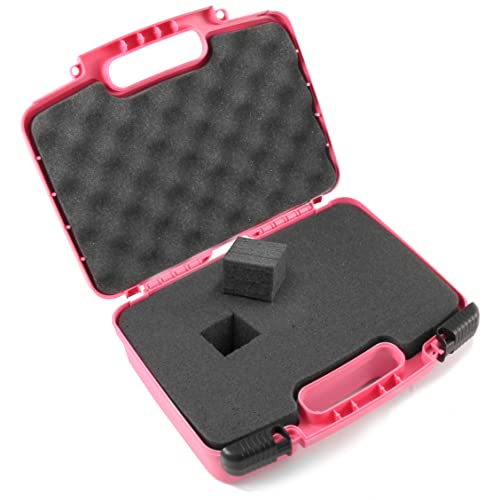
This hard case fits one mic and a few accessories in pre-diced foam that you shape to the gear. At 11 by 7.25 by 2.75 inches and 1.17 lb, it slips into a gig bag, a backpack, or a suitcase without adding weight, and the plastic shell guards a single mic against knocks on the road. The pink shell is easy to spot among black cases, and the customizable foam suits odd shapes like a short handheld with a clip or a mic plus a recorder. It is the pick for a solo performer who carries one mic and wants it protected, not buried in a big case.
Specs
- Dimensions: 11 x 7.25 x 2.75 in
- Weight: 1.17 lb
- Material: Plastic and foam
- Size: 12
- Color: Pink
- Interior: Pre-diced customizable foam
Best for: A solo performer carrying one mic plus small accessories in a gig bag.
Watch out for: Plan the foam layout before pulling cubes, since pre-diced foam cannot be put back, and confirm availability on the listing before ordering.
Which One Fits Your Situation
You run a wireless system at gigs
The CASEMATIX wireless system case fits this night. It holds the receiver, body packs, and handhelds in one molded box, so setup means opening one lid instead of hunting through three bags. If the rig grows to a second system, the MRINCA four-slot organizer covers the extra handhelds and keeps the second receiver in the same bag. The SKB case does not fit here, since it is built for wired mics rather than receivers.
You carry a dozen wired mics for a group
The SKB twelve-mic case is the answer for a choir, a school, or a church with a shared mic locker. Twelve vertical slots keep every handheld apart, and the waterproof shell survives rain and damp storage rooms. The weight is the trade, so keep the case near the stage or on a cart rather than carrying it across a campus. For fewer mics, the On-Stage six-space bag covers half the lineup at a fraction of the weight.
You rehearse weekly with a few mics
The On-Stage six-space bag fits a band that meets in the same room every week. Six spaces take the lineup, the shoulder strap leaves a hand free for a guitar or a stand, and the bag rides in a car without fuss. Add the CASEMATIX twelve-inch foam case for a mic that needs a hard shell inside the gig bag. Avoid the SKB box here, since twelve slots and nearly nine pounds are more case than a rehearsal needs.
You travel light with one or two mics
The CASEMATIX twelve-inch foam case is the travel pick for an act with one mic. It guards one mic in a shell that slips into a backpack or a suitcase, and the pre-diced foam shapes around a handheld or a mic plus a recorder. For two wireless handhelds, the MRINCA four-slot organizer adds room for a receiver and cables without a second bag. Skip the twelve-mic case on a trip, since its size and weight work against light travel.
Common Mistakes
- Buying a case for the mic count you hope to own instead of the rig you carry now, then finding the receiver has nowhere to go.
- Skipping the tape measure and learning that a tall handheld closes the lid a centimeter short.
- Choosing a soft bag for a van packed under amps and flight cases, where a hard shell would have taken the load.
- Forgetting cables, clips, and batteries, then carrying a second bag because the case holds mics only.
- Pulling pre-diced foam cubes before planning the layout, which leaves a loose fit that cannot be put back.
Frequently Asked Questions
How many mics should a case hold?
Hold one more than you carry on a normal night. A spare slot covers the mic you borrow, the one you buy next month, or a guest vocalist at a gig. A case that fits exactly today turns tight the moment the lineup grows, while one spare slot costs little extra room. Count the receiver and body packs too, since a wireless rig needs more than mic slots alone.
Do I need a hard shell or a padded bag?
Pick a hard shell when the case rides under gear in a van, flies as luggage, or faces rain on the walk from the car. Pick a padded bag when the case travels by hand to a rehearsal and weight matters more than crush protection. Many musicians own both: a shell for tours and a bag for home nights. Match the shell to the hardest trip it will take.
Can one case fit both wired and wireless mics?
The fit differs by kind. A wireless handheld matches a wired handheld, so a foam slot that fits one fits the other. The trouble is the receiver and body packs, which need their own pockets and will not squeeze into a mic slot. A system case with room for a receiver covers both kinds, while a wired-only case leaves the receiver out. Check the interior layout against the rig.
How do I keep mics safe on the road?
Give each mic its own pocket so grilles never knock together, and keep the case closed and latched whenever it moves. Pack cables and clips in a lid pocket, not loose on top of the mics. Set the case down flat, and keep it out of rain and damp corners. At home, keep the case dry with the latches open a crack.
FAQ
How many mics should a case hold?
Do I need a hard shell or a padded bag?
Can one case fit both wired and wireless mics?
How do I keep mics safe on the road?
More from Amazon
Programs that pair well with the guide above. Offers and eligibility are set by Amazon and may change.
Free shipping on eligible items, Prime Video and more. Eligible new members can start with a free trial.
Start a Prime free trialAudiobooks and podcasts to listen to on the go. Eligible new members can start with a free trial.
Try Audible freeAd-free music streaming. Eligible new subscribers can start with a free trial.
Try Music Unlimited freeA free business account with business pricing and bulk-buying tools for work, shop or home office.
Create a business accountAs an Amazon Associate we earn from qualifying purchases.


Write Your Review
No reviews yet. Be the first to share your experience!