
Key takeaways
- Find the best entryway rugs for busy homes: washable runners, low-pile area rugs and weather-ready picks that trap dirt and suit any entry beautifully.
The best entryway rug is the nuLOOM Krystin Medallion Machine Washable Runner Rug, because it pairs a classic medallion pattern with a machine-washable build and a runner shape that fits most entries. If your entry is long and narrow, the nuLOOM Moroccan Blythe runner covers more floor in one piece. If your door opens onto a covered porch or an entry that sees rain and mud, the SAFAVIEH Courtyard runner handles weather better than the others. For a small entry on a tight budget, the Ottomanson bordered runner and the Lahome Bohemian Floral Medallion rug round out the group with two very different looks at the affordable end of the range.
An entryway rug works harder than almost any other rug in the home. It is the first surface shoes meet, the place where coats drip, where dogs shake off rain, where grit from the driveway gets ground into fibers day after day. A rug that looks lovely in a product photo but slides across the floor, curls at the corners, blocks the door, or refuses to come clean will fail within weeks, and the failure shows up as scuffed floors, damp socks, and a trail of dirt that reaches the living room by the end of a wet week. The right rug does the opposite: it traps dirt where it lands, stays flat underfoot, clears the door swing, and cleans up without a fight.
This guide compares five entryway rugs that take genuinely different approaches to that job. There is a washable medallion runner, a long stain-resistant runner for generous entries, a weather-ready indoor and outdoor plaid runner, a slim bordered runner for tight spaces, and a soft floral area rug for entries that double as a first glimpse of the living room. Between them they cover small apartments, family homes with pets and children, covered porches, and long hallways that open straight onto the front door.
As an Amazon Associate, we earn from qualifying purchases.
Table of Contents
- How to Choose an Entryway Rug
- 1. nuLOOM Krystin Medallion Machine Washable Runner Rug
- 2. nuLOOM Moroccan Blythe Indoor Area Rug Runner
- 3. SAFAVIEH Courtyard Collection Plaid Runner Rug
- 4. Ottomanson Contemporary Bordered Runner Rug
- 5. Lahome Bohemian Floral Medallion Washable Area Rug
- Which Entryway Rug Should You Choose
- Frequently Asked Questions
- Conclusion
- Product and ASIN Reference
How to Choose an Entryway Rug
Start With the Size of the Entry
Measure the entry before looking at patterns. A rug that is too small looks lost and fails to catch dirt from a normal stride, while a rug that is too large bunches against walls, creeps under furniture, or catches the door. For a standard single front door, a rug around two feet wide and three to five feet long covers the landing zone where shoes stop. A runner shape, roughly two feet wide and six to eight feet long, suits a hallway entry or a long foyer, because it guides foot traffic along the whole path from the door to the rest of the home. A wider rectangular rug, around three by five feet or five by seven feet, suits a square entry or an open-plan space where the entry flows into the living room and the rug needs to anchor the zone visually.
Leave a border of bare floor around the rug where you can. A rug that runs wall to wall in a small entry traps moisture at the edges and makes the space feel cramped. A few inches of visible floor on each side frames the rug, lets you see when dirt has collected at the edges, and keeps the rug from rubbing against baseboards and door frames. In a rental or a home with a low door, measure the clearance under the door as well, because a rug that looks slim in a photo can still catch a door that swings inward over it.
Choose a Low Pile
Pile height decides how an entryway rug ages. Low-pile and flat-woven rugs release dirt to a vacuum, dry quickly after wet weather, and let doors swing over them without catching. They also suit wheeled luggage, strollers, and walkers, which roll smoothly over a flat surface and snag on deep pile. Medium pile feels softer under bare feet and hides the texture of trapped grit, but it holds moisture longer and needs more vacuuming to stay clean. Deep pile and shag have no place at a front door: they trap dirt out of sight, stay damp, and make the entry look untidy within days.
Every rug in this guide is low or medium pile. The washable runners sit at the flat end of the range, the weather-ready plaid runner has a quarter-inch pile that hoses clean, and the floral area rug has a low faux-wool pile that balances softness with easy vacuuming. None of them will block a standard door, and none of them needs a special vacuum setting to stay clean.
Pick a Material That Matches the Traffic
Polypropylene dominates entryway rugs for good reason. It resists stains, does not shed, dries quickly, and survives repeated cleaning without fading or fraying. It is the right choice for entries with pets, children, muddy boots, and wet umbrellas. Polyester is the other workhorse: it is soft underfoot, holds color well, resists stains, and washes easily, which makes it the natural choice for machine-washable rugs. Natural fibers such as jute and cotton look warm and textured, but they absorb moisture, dry slowly, and stain more easily, so they suit covered entries and light-traffic homes better than busy family doors.
Think about what your entry actually faces. A door that opens onto a garden path or a driveway brings in grit and damp. A door in an apartment building brings in dust and the occasional wet umbrella. A home with a dog brings in muddy paws in every season. Match the material to the mess: synthetic fibers for the messiest doors, softer washable fibers where the priority is comfort and easy laundering, and a weather-ready weave where rain reaches the threshold.
Backing and Grip Matter More Than Pattern
A rug that slides on a hard floor is a hazard at the front door, where people step in carrying bags, holding children, or balancing on one foot to remove shoes. Look for a rubber backing, a latex bonding layer, or a textured grip backing that holds the rug to tile, wood, and laminate. The backing also decides whether the rug marks the floor: natural rubber grips without the plasticizers that can react with some finishes, while cheap plasticized backings can stick to or dull certain floors over time. If a rug you love has no grip backing, a separate rug pad solves the problem, but a built-in backing is simpler and keeps the profile low.
Check the backing against your floor type before ordering. Rubber and latex-free backings suit most hard floors. Some backings can discolor vinyl or finished wood if moisture is trapped beneath them for long periods, so lift the rug regularly, let the floor dry, and shake out trapped grit. A rug that stays put also stays cleaner, because grit is not ground between the backing and the floor finish with every step.
Cleaning Should Be Simple
An entryway rug gets dirty faster than any other rug in the home, so the cleaning routine decides whether it stays in use or ends up rolled in a closet. Machine-washable rugs are the lowest-effort option over time: shake outside, wash on a gentle cold cycle, and air dry. Hose-cleanable and wipe-clean rugs suit entries where the rug is too large for a machine or where mud is a daily event. Hand-wash and spot-clean rugs demand more attention, so they suit lighter-traffic entries or homes where the rug is as much decoration as protection.
Whatever the care label says, vacuum the entryway rug more often than the rugs in the rest of the home. A quick pass every few days keeps grit on the surface, where the vacuum can reach it, instead of letting it sink into the pile and wear the fibers from the inside. Shake the rug outside when the weather allows, and let it dry fully after washing or after a wet day before laying it back down.
Door Clearance and Safety
Measure the gap under your front door before you buy. A rug that is too thick will catch the door, bunch up, and create a trip edge exactly where people step inside. Most entryway rugs are designed with this in mind and sit low enough to clear a standard door, but older homes, doors with weather stripping, and doors that swing inward over the rug can all reduce the clearance. If the gap is tight, choose an ultra-thin or flat-woven rug, or place the rug slightly to one side of the door swing so the door clears it.
Safety also means thinking about who uses the door. A low profile that does not catch toes suits older adults, children, and anyone using a walker or a cane. A rug with a beveled or tapered edge is less likely to curl and trip a hurried step. In a home with a baby who crawls or a toddler learning to walk, a rug that lies flat and stays put is worth more than a thicker rug that looks plush in a photo.
Style Sets the Tone of the Home
The entryway is the first room guests see, so the rug sets the tone for the whole home. A medallion or floral pattern in soft neutrals warms a plain hallway and hides dust between cleanings. A plaid or geometric runner adds structure to a long, narrow entry and makes the space feel intentional rather than leftover. A bordered runner in a dark tone hides dirt and frames the walkway, which suits busy family entries where the rug is working hard every day.
Neutral colors hide dust and lint, while darker colors hide mud and pet hair. Pale rugs show every footprint, so they suit low-traffic entries or homes where the rug is cleaned often. Patterned rugs hide dirt better than solid rugs, which is why most entryway rugs carry a pattern: medallion, trellis, plaid, floral, or geometric. Choose a pattern that echoes something else in the entry, such as the color of the front door, a bench cushion, or the hallway paint, and the rug will look like part of the home rather than an afterthought.
1. nuLOOM Krystin Medallion Machine Washable Runner Rug

The nuLOOM Krystin Medallion runner is the best all-around entryway rug in this guide, and the reason is simple: it does the three things an entryway rug must do, and it does all three well. It looks like a proper rug rather than a utilitarian mat, it goes straight into the washing machine when it gets dirty, and its runner shape fits the long, narrow entries that most homes actually have. The medallion pattern in beige and ivory warms a plain hallway without shouting, and the muted palette hides dust and lint between cleanings far better than a solid pale rug would.
At two feet wide and eight feet long, this runner covers the full path from the front door to the rest of the home in most houses. That length matters more than it seems. A short rug catches dirt only where shoes first land, while a runner that reaches the hallway catches the second and third steps too, which is where the grit that survives the first step finally falls. In an apartment, the same length can run from the door along the wall to the kitchen or living room, turning a bare corridor into a finished space. In a larger home, it suits a foyer that opens onto a hallway, where a square rug would look small and a wide rug would crowd the walls.
Machine washability is the feature that earns this rug the top spot. Entryway rugs get dirty faster than any other rug in the home, and a rug that cannot be washed properly will look tired within a season. With this runner, the routine is straightforward: shake it outside to remove loose dirt, wash it on a gentle cold cycle, and air dry it. There is no special cleaner to buy, no professional cleaning to schedule, and no need to scrub on hands and knees after a muddy week. For a household with children, pets, or a garden that sends mud indoors, that ease of care is worth more than any pattern.
The medallion design deserves attention because it solves a real problem. Entryway rugs show dirt, and a busy pattern hides it. The Krystin medallion repeats across the runner in a faded, classic style that reads as intentional rather than busy, and the beige and ivory tones blend with wood floors, tile, and painted walls alike. It suits a traditional home, a farmhouse entry, and a modern hallway with neutral furniture, which makes it a safe choice when the rest of the entry is still taking shape. The pattern also disguises the wear that comes with heavy traffic: the center of the runner, where every step lands, does not show a path the way a solid rug would.
Low profile is another strength. A runner that sits flat underfoot does not catch the door, does not trip a hurried step, and does not bunch when luggage wheels roll over it. It also vacuums easily, because the vacuum head glides over a flat surface instead of snagging on deep fibers. The washable construction keeps the rug light enough to carry outside for shaking and to load into a standard home washing machine, which is not true of every rug in this size range.
There are limits to keep in mind. A washable runner is not a heavy-duty outdoor mat, and it will not scrape packed mud off boots the way a coarse coir or rubber scraper does. In a home where boots come in caked with mud, pair it with a scraper outside the door and let the runner handle the finer dirt that remains. The light colorway, while forgiving, will show dark mud more readily than a dark runner, so homes with heavy clay soil may prefer to wash it more often or choose a darker rug from the same line. And because the rug is designed to be washed, it is best to follow the care label closely: cold water, gentle cycle, and air drying protect the fibers and the backing far better than hot water or a heated dryer.
For most homes, though, this is the rug to start with. It fits the space, it cleans easily, it looks like part of the home, and it stays flat and safe underfoot. It is the mid-range choice in this guide, and it earns that place by doing the everyday job better than the alternatives.
Specs
- Size: 2 by 8 feet runner
- Pattern: Medallion in beige and ivory
- Care: Machine washable
- Profile: Low pile that sits flat under doors
- Rooms: Entryway, hallway, living room, bedroom, dining room, and kitchen
- Tier: Mid-range
2. nuLOOM Moroccan Blythe Indoor Area Rug Runner
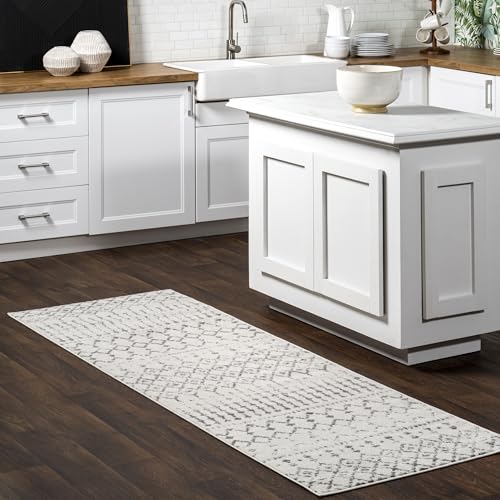
The nuLOOM Moroccan Blythe runner is the long-coverage pick in this guide. At two feet wide and fourteen feet long, it is built for entries that keep going: a front door that opens onto a long hallway, a foyer that stretches to the stairs, or an open-plan home where the entry flows straight into the living space. One continuous runner looks better than two short rugs butted together, and it protects the whole walkway instead of only the first few feet.
The construction is entirely polypropylene, power-loomed, and stain resistant, which is exactly the combination a high-traffic entry needs. Polypropylene does not absorb spills the way natural fibers do, so muddy water, coffee drips, and wet paw prints sit on the surface long enough to be wiped or vacuumed away. The fibers do not shed, so the rug does not leave fluff on dark floors or clog the vacuum. The faded bohemian design in grey softens the look, and the distressed motif hides dust and light dirt between cleanings, which matters in a fourteen-foot runner that nobody wants to wash every week.
The backing uses latex bonding with a slip grip, which helps the runner stay in place on hard floors without a separate pad in most homes. That matters over fourteen feet, because a long runner that creeps will bunch at one end and leave bare floor at the other. The medium cut pile feels softer under bare feet than a flat weave, which makes the runner pleasant to walk on in socks, while still sitting low enough to clear a standard door and to let a vacuum pass over it without a fight. The rug is made in Turkey, and the power-loomed construction keeps the pattern sharp and the edges straight across the full length.
A runner this long also changes how an entry feels. A short rug at the door says the entry is a place to pass through. A long runner says the hallway is part of the home, and it gives a narrow space a sense of direction and finish. In a home with a dark hallway, the grey tones keep the space from feeling heavy, and the pattern adds interest without needing wall art or furniture. In a home with wood floors, the runner protects the finish along the busiest path in the house, which is where scratches and wear show first.
The trade-off for the length is care. A fourteen-foot runner does not fit in a standard home washing machine, so cleaning means vacuuming regularly, shaking the rug outside when possible, and spot cleaning spills promptly. That is a fair trade for most homes, because the stain-resistant fibers make spot cleaning effective, and the rug is designed to be vacuumed rather than laundered. Homes that want a fully machine-washable rug should look at the shorter Krystin runner instead, while homes that want maximum coverage will find the Blythe hard to beat.
Size is also a commitment. Measure the hallway before ordering, and leave a border of bare floor on each side so the runner does not rub against the walls. A runner that is too long for the space will bunch at the end and create a trip edge, while a runner that fits with a few inches to spare looks intentional and stays flat. In a very long hallway, the fourteen-foot length may still leave a gap, in which case a second rug or a longer run of bare floor at the far end is better than forcing the runner to fit.
For large entries and long hallways, this is the strongest pick in the guide. It covers more floor, resists stains, stays put, and looks like it belongs in the home rather than like a mat that was added as an afterthought.
Specs
- Size: 2 by 14 feet runner
- Material: 100 percent polypropylene
- Construction: Power-loomed, made in Turkey
- Pattern: Faded bohemian trellis in grey
- Pile: Medium cut pile
- Backing: Latex bonding with slip grip
- Care: Vacuum regularly and spot clean spills
- Tier: Mid-range
3. SAFAVIEH Courtyard Collection Plaid Runner Rug

The SAFAVIEH Courtyard runner is the weather-ready pick in this guide, and it is the one to choose when the entry faces the outdoors. It is an indoor and outdoor rug, woven from polypropylene, with a rubber backing and a quarter-inch pile that can be hosed clean. Rain, snow, mud, and wet boots are its normal working conditions, not a problem to work around. For a covered porch, a mudroom, a back entry that opens onto a garden, or a front door that takes the weather full on, this is the most durable rug in the group.
The plaid pattern in grey and bone is classic without being dull. Plaid suits a wide range of homes, from a country entry with a wooden bench to a modern hallway with pale walls, and the two-tone pattern hides dirt and footprints better than a solid rug. The grey and bone colorway blends with wood, stone, and tile, and it does not show the pale dust that settles on dark rugs or the dark mud that shows on pale ones. At two feet three inches wide and six feet seven inches long, the runner covers a generous entry without overwhelming a small space, and the size suits a single door with room for two people to step inside side by side.
Polypropylene is the right material for a rug that gets wet. It does not absorb water, so the rug dries quickly after rain instead of staying damp and musty. It resists stains from mud, leaves, and spilled drinks, and it does not fade quickly in sunlight, which matters on a covered porch where the sun reaches the rug for part of the day. The fibers are non-shedding, so the rug does not leave fluff on the porch or in the hallway, and the machine-woven construction keeps the plaid pattern straight and the edges neat through seasons of use.
The rubber backing is a genuine advantage. It grips hard floors and holds the rug in place when wet shoes step onto it, which is exactly when a sliding rug is most dangerous. The backing also keeps moisture from passing through to the floor beneath, which protects wood and laminate from the damp that a soaked rug can leave behind. The quarter-inch pile is low enough to clear most doors and to let a vacuum pass over it easily, while still giving enough texture underfoot to scrape light dirt from shoes.
Cleaning is simple and does not need a machine. Shake the rug outside, sweep it, vacuum it, or hose it down and let it air dry. That routine suits a mudroom or a porch entry where the rug may need cleaning after every wet day, and where carrying a rug to the washing machine would be impractical. The rug is also suited to homes with children and pets, because the synthetic fibers handle spills, muddy paws, and dropped food without staining or holding odors the way natural fibers can.
There are two things to know before choosing this runner. First, it is a practical rug rather than a soft one: the low pile and outdoor construction feel firmer under bare feet than the washable runners in this guide, so homes that prioritize softness may prefer the Lahome floral rug for an indoor-only entry. Second, the rug is designed for weather, so it performs best where weather actually reaches it; in a dry, carpeted apartment entry, its strengths are less visible, and a softer washable rug may suit the space better. For the entry it is built for, though, there is no better pick here.
This is the premium choice in the guide, and the premium is in the construction: a weather-resistant, UV-resistant weave, a rubber backing, and a build that is made to live with rain and mud rather than merely survive them.
Specs
- Size: 2 feet 3 inches by 6 feet 7 inches runner
- Material: Polypropylene
- Construction: Machine-woven, indoor and outdoor use
- Pattern: Plaid in grey and bone
- Pile: 0.25 inch, non-shedding
- Backing: Rubber
- Care: Shake, vacuum, or hose clean and air dry
- Features: Stain, weather, and UV resistant
- Tier: Premium
4. Ottomanson Contemporary Bordered Runner Rug

The Ottomanson Contemporary Bordered runner is the slim, budget-friendly pick for tight entries. At one foot ten inches wide and six feet long, it fits the narrow spaces that wider runners cannot: a small apartment entry, a hallway beside a staircase, a galley entry with a shoe rack on one side, or a doorway where a wider rug would crowd the walls. The dark brown border frames the walkway and hides the dirt that collects at the edges, which is where a narrow runner shows wear first.
The bordered design is one of the oldest tricks in rug design, and it works because it gives the eye a frame. A plain runner in a narrow hallway can look like a strip of carpet; a bordered runner looks like a deliberate choice. The dark brown border contrasts with the lighter center, which makes the hallway feel wider than it is, and the border hides scuffs from shoes that step on and off the rug. The low pile keeps the profile slim, so the rug slides under doors and sits flat on wood, tile, and laminate without curling at the corners.
The backing is rubber, which grips the floor and keeps the runner from sliding when someone steps onto it with wet shoes or while carrying bags. That grip matters in a narrow space, because there is no room for the rug to drift before it hits a wall or a piece of furniture. The low pile also means the rug vacuums easily and does not trap grit deep in the fibers, so a quick pass with a vacuum keeps it looking clean between deeper cleans.
Care is by hand washing, which is the main trade-off for the low cost and slim profile. Hand washing a six-foot runner is manageable: take it outside, shake it, wash it with mild soap and water, rinse, and air dry. It takes more effort than tossing a rug in the machine, but it is a fair exchange for a rug that costs less and fits spaces the washable runners cannot. Homes that want a fully machine-washable rug in a narrow width should check the other picks, while homes that are happy to hand wash will find this runner easy to live with.
The size is the point of this rug, so measure before ordering. A runner that is one foot ten inches wide needs a hallway at least two feet wide to sit comfortably, and it needs a few inches of bare floor on each side to look intentional. In a hallway that is exactly the width of the rug, the runner will rub against the walls and wear at the edges. In a hallway with room to spare, the rug guides foot traffic, protects the floor, and makes the space feel finished.
For small entries, apartments, and narrow hallways, this is the most practical pick in the guide. It is the budget choice, and it earns that place by fitting the spaces other runners cannot and by doing the basic job, staying flat, gripping the floor, and hiding dirt, without fuss.
Specs
- Size: 1 foot 10 inches by 6 feet runner
- Design: Contemporary bordered pattern with dark brown border
- Pile: Low pile
- Backing: Non-slip rubber backing
- Care: Hand wash only
- Rooms: Entryway, hallway, kitchen, laundry room, and bathroom
- Tier: Budget
5. Lahome Bohemian Floral Medallion Washable Area Rug

The Lahome Bohemian Floral Medallion rug is the soft, decorative pick in this guide, and it is the one to choose when the entry is also a first glimpse of the living room. At five feet by seven feet, it is a proper area rug rather than a runner, which suits a square entry, an open-plan space, or a foyer that flows into the living room without a hallway. The floral medallion pattern in soft, muted tones warms a plain floor and makes the entry feel like a room rather than a passage.
The rug is machine washable, which is the feature that makes a five-by-seven rug practical at a front door. A rug this size collects a lot of dirt, and a rug that cannot be washed will look tired within a season. With this one, the routine is the same as for the washable runner: shake it outside, wash it on a gentle cold cycle, and air dry it. The low pile dries faster than a deep pile rug, and the faux-wool surface feels soft under bare feet without holding moisture the way a natural wool rug would.
The pattern is the reason to choose this rug over a plainer one. The bohemian floral medallion is detailed enough to hide dust, footprints, and light dirt between cleanings, and the distressed, oriental-inspired design suits a wide range of homes, from a bohemian living room to a traditional entry with wooden furniture. The soft, muted colors blend with wood floors and painted walls, and the pattern echoes the kind of rug that might sit in the living room beyond, which ties the entry to the rest of the home.
The non-slip backing holds the rug in place on hard floors, which matters in a five-by-seven rug that sees traffic from several directions. A rug this size can creep in more than one direction, and a backing that grips keeps it flat and safe. The low pile also suits furniture: a bench, a shoe rack, or a small table can sit on the edge of the rug without wobbling, and the rug does not catch the legs of a chair pulled out from a nearby table.
There are limits to note. A five-by-seven rug is too large for a small or narrow entry, and it will overwhelm a space that needs a runner instead. Measure the entry and leave a border of bare floor around the rug, or the room will feel smaller than it is. The light, soft colors will show dark mud more readily than a dark runner, so homes with heavy clay soil or very muddy boots may prefer to wash the rug often or choose a darker rug. And because the rug is large, washing it needs a machine with enough capacity, so check the drum size before ordering if the home washing machine is small.
For entries that double as living space, this is the warmest pick in the guide. It is the mid-range choice, and it earns that place by combining the softness and pattern of a living-room rug with the washability and low pile that a front door demands.
Specs
- Size: 5 by 7 feet area rug
- Pattern: Bohemian floral medallion, oriental distressed design
- Material: Soft faux-wool pile
- Care: Machine washable
- Profile: Low pile, non-shedding
- Backing: Non-slip backing
- Rooms: Entryway, living room, bedroom, dining room, and nursery
- Tier: Mid-range
Which Entryway Rug Should You Choose
Start with the shape of the entry, because shape narrows the choice faster than any other factor. A long, narrow hallway needs a runner: the Krystin medallion runner for a washable everyday rug, the Blythe runner for maximum coverage, the Courtyard runner for weather, or the Ottomanson bordered runner for a tight space. A square entry or an open-plan space needs an area rug, and the Lahome floral medallion is the pick there.
Next, weigh cleaning against softness. If the rug must go in the washing machine, choose the Krystin runner or the Lahome rug. If the rug will be hosed or shaken clean, choose the Courtyard runner. If hand washing is acceptable, the Ottomanson runner offers the slimmest fit at the lowest tier. If the rug is too long for a machine, the Blythe runner trades machine washing for stain resistance and coverage.
Finally, consider the weather at the door. A door that faces rain, snow, and mud needs the Courtyard runner and its rubber backing. A door in an apartment building or a dry climate can take any rug in the guide. A home with pets and children will get the most from the washable picks, because the rug will need cleaning often and the cleaning should be easy.
A simple way to decide: most homes should start with the Krystin medallion runner, because it fits the most entries and cleans the most easily. Long hallways should take the Blythe runner. Wet entries should take the Courtyard runner. Tight entries should take the Ottomanson runner. Open-plan entries should take the Lahome rug.
Frequently Asked Questions
What size entryway rug should I buy for a standard front door?
A rug around two feet wide and three to five feet long covers the landing zone for a standard single door, while a runner around two feet wide and six to eight feet long suits a hallway entry. Measure the entry and the door swing before ordering, and leave a border of bare floor around the rug so it frames the space instead of crowding it.
Are washable entryway rugs better than rugs that need spot cleaning?
Washable rugs are easier to live with in busy entries, because they can be laundered fully after muddy weeks instead of only spot cleaned. Spot-clean rugs suit lighter-traffic entries and longer runners that do not fit a home washing machine. Either type stays clean with regular vacuuming, and the best choice depends on how dirty the entry gets and how much effort the household wants to spend on cleaning.
How do I keep an entryway rug from sliding on a hard floor?
Choose a rug with a rubber backing, a latex bonding layer, or a textured grip backing, and place it on a clean, dry floor. Lift the rug regularly to remove trapped grit and let the floor dry, because grit under the backing reduces grip. If a rug has no grip backing, a separate rug pad cut slightly smaller than the rug will hold it in place.
Can I use an entryway rug on a covered porch?
A rug built for indoor and outdoor use, such as a polypropylene runner with a rubber backing, suits a covered porch well, because it resists moisture, dries quickly, and hoses clean. A machine-washable indoor rug can work on a covered porch in dry weather, but it will stay damp longer after rain and may need more frequent washing. Keep any rug out of standing water and direct downpours, even on a covered porch.
Conclusion
An entryway rug earns its place by doing a hard job quietly: catching dirt, staying flat, clearing the door, and cleaning up without a fight. The five rugs in this guide take different routes to that job. The nuLOOM Krystin Medallion runner is the best all-around pick, because it is washable, well sized, and good looking. The nuLOOM Moroccan Blythe runner covers long hallways that shorter rugs cannot. The SAFAVIEH Courtyard runner handles weather that would defeat an indoor rug. The Ottomanson bordered runner fits tight entries at the budget end of the range. The Lahome Bohemian Floral Medallion rug brings the softness and pattern of a living-room rug to an entry that doubles as living space.
Measure the entry, check the door clearance, and choose the rug that matches the traffic at the door. A rug that fits the space and cleans easily will stay in use for years, and the floors beyond the entry will show the difference every day.
Product and ASIN Reference
| Product | ASIN |
|---|---|
| nuLOOM Krystin Medallion Machine Washable Runner Rug | B08SWQFF6F |
| nuLOOM Moroccan Blythe Indoor Area Rug Runner | B084LNFDLP |
| SAFAVIEH Courtyard Collection Plaid Runner Rug | B00BEU2BB6 |
| Ottomanson Contemporary Bordered Runner Rug | B00EP06HH6 |
| Lahome Bohemian Floral Medallion Washable Area Rug | B0BBLJL45P |
More from Amazon
Programs that pair well with the guide above. Offers and eligibility are set by Amazon and may change.
Free shipping on eligible items, Prime Video and more. Eligible new members can start with a free trial.
Start a Prime free trialAudiobooks and podcasts to listen to on the go. Eligible new members can start with a free trial.
Try Audible freeAd-free music streaming. Eligible new subscribers can start with a free trial.
Try Music Unlimited freeA free business account with business pricing and bulk-buying tools for work, shop or home office.
Create a business accountAs an Amazon Associate we earn from qualifying purchases.

Write Your Review
No reviews yet. Be the first to share your experience!