
Key takeaways
- Compare five glass wine decanters, from a wide-base Le Chateau to the Riedel Performance, with sizing, aeration and cleaning help for everyday tables.
A decanter earns its place on a minimalist table only if it does quiet, useful work. It gives a young red room to breathe, lets sediment from an older bottle stay behind instead of reaching your glass, and turns pouring into a calmer ritual. Decanters come in dozens of shapes, though, and the differences that matter are easy to miss in a product photo.
This guide compares five glass wine decanters that cover the main shapes worth owning: a wide-base classic, a machine-made crystal decanter from a specialist glassmaker, a large U-shaped carafe for magnum-sized pours, a complete set with a filter and drying stand, and a stoppered carafe sized between a bottle and a magnum. Each one is lead-free, each one is a single piece of glassware rather than a gadget, and each one suits a table that values a few good objects over a crowded cabinet.
As an Amazon Associate, we earn from qualifying purchases.
Quick answer
For most tables, the Le Chateau Wine Decanter is the one to buy first: hand-blown lead-free crystal, a wide base that spreads one bottle thin for fast aeration, and a slanted spout that pours cleanly. If you want dishwasher-safe machine-made crystal, choose the Riedel Performance. For a full kit with filter, stand and cleaning beads, choose the YouYah Iceberg set.
Le Chateau Wine Decanter

The Le Chateau is the classic wide-base shape done carefully. It is hand-blown from lead-free crystal glass and sized for one standard bottle: the listed capacity is 750 ml, and the base measures about 8.5 inches across, which is wider than most decanters in this class. That width is the point. A full bottle poured into this base spreads into a thin layer with a large surface exposed to air, so a tight, young red softens faster than it would in a narrow carafe.
The slanted spout is cut at an angle that helps the wine leave the decanter in a controlled stream rather than dribbling down the neck, and the neck is long enough to grip securely even when the decanter is full. The listing describes the piece as dishwasher safe, though the maker still suggests gentle handling, and the decanter carries a lifetime replacement policy from Upper Echelon Products, the company behind the brand. It weighs about a pound and a half, light enough to pour one-handed at the table.
There is no stopper, so this is a decanter for wine you plan to finish the same evening rather than store. The wide base also takes real cabinet space, and the thin hand-blown glass deserves a padded shelf. For a single all-purpose decanter that handles the everyday bottle well and looks calm doing it, this is the reference point the rest of this list is measured against.
Riedel Performance Decanter

Riedel makes the Performance decanter, model 1490/13, from machine-made crystal glass, and it is the precision option in this group. Where the hand-blown pieces vary slightly from one unit to the next, the Performance comes off a production line tuned for consistency, with the fine optic ridges that define Riedel’s Performance glassware series running through the bowl. Those ridges are not only decoration: as wine is swirled, the ridged surface agitates the liquid and increases contact with air.
The decanter is crafted to hold a standard 750 ml bottle, which fills it to a sensible working level with headroom to swirl. It is one of the lighter pieces here at roughly twelve ounces, and Riedel rates it dishwasher safe, a practical difference from most hand-blown glass. The shape is upright and comparatively compact, so it stores more easily than a wide-base decanter and sits comfortably on a crowded sideboard.
The trade-offs are character and theatre. The Performance looks like fine glassware rather than a sculptural object, and its narrower bowl aerates a young red more gently than a wide base does, so patience matters more with this one. Choose it if you value repeatable quality, easy cleaning and a decanter that matches a modern, uncluttered table setting.
Smaier Wine Decanter, 1500 ml

The Smaier decanter is the large-format option. It is hand-blown from lead-free crystal glass with a listed capacity of 1500 ml, twice a standard bottle, in a smooth U-shaped body with a slanted spout. That size makes it the natural pick for magnum bottles, for decanting two bottles of the same wine before a larger dinner, or for anyone who prefers a taller, more dramatic silhouette on the table.
The U shape changes how the wine behaves. A single bottle sits lower in the curve with less surface spread than a wide-base decanter gives, so aeration is gentler and slower, which suits delicate older wines that can fall apart with too much air. The slanted spout keeps pouring controlled, and the long neck gives a secure two-part grip: one hand on the neck, one supporting the base when the vessel is full.
Size is the honest drawback. Filled with a magnum, this is a heavy pour, and the tall body needs a safe route from counter to table. It is also the hardest shape here to dry fully after washing, since air circulates slowly through the narrow neck. If your dinners regularly involve bigger bottles or a second bottle of the same wine, the extra capacity earns its shelf space; if not, a one-bottle decanter is the calmer choice.
YouYah Iceberg Wine Decanter Set
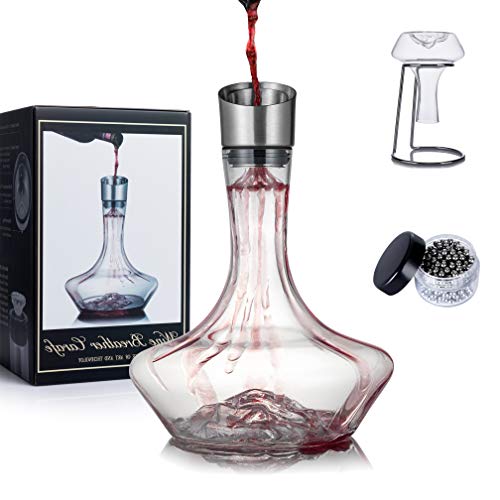
The YouYah Iceberg is sold as a complete decanting kit rather than a bare vessel. The decanter itself is hand-blown lead-free crystal with a 1400 ml capacity and a distinctive low, wide body with a textured base. In the box you also get a stainless steel pourer lid with a built-in filter and aerator, a drying stand, and a box of stainless cleaning beads, the small kit that most decanter owners end up buying separately.
The pourer lid is the functional heart of the set. Wine poured through it fans out across a filter that catches sediment and cork fragments while spreading the stream thin so it picks up air on the way in. For older bottles with real sediment, that filter earns its keep. The drying stand solves the other everyday decanter problem, drainage: the vessel rests inverted at an angle so water runs out instead of pooling in the base. The cleaning beads swirl around the interior with a little water and reach the curves a brush cannot.
At about two pounds for the decanter alone, plus the stand and accessories, this set asks for more storage than a single plain carafe. The minimalist question is whether the extras replace separate purchases, and here they genuinely do. If you decant often and want one box that covers filtering, drying and cleaning, this is the most complete option in the guide.
KANARS Wine Decanter Carafe
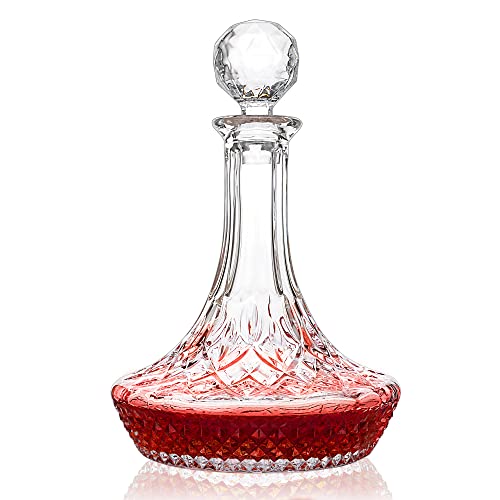
The KANARS carafe, model WD414, fills the gap between a standard bottle decanter and the large formats. It is hand-blown from lead-free crystal glass with a listed capacity of 1250 ml, and it comes with a fitted stopper, which most decanters in this guide lack. That stopper changes how the piece can be used: wine can rest covered between pours, and the carafe can hold water, iced tea or a batched cocktail on the table without sitting open.
The shape is a rounded, open body with a flared rim that pours without drama. A full bottle leaves generous headroom, so swirling is easy and aeration sits between the wide-base Le Chateau and the tall Smaier. KANARS packages the carafe in a gift box and presents it as much as a serving pitcher as a dedicated wine tool, which fits its in-between size.
The compromises are focus and weight. It is heavier than the one-bottle decanters, and the stopper is a loose fit for decanting pauses, not an airtight seal for storing wine overnight; no decanter stopper truly is. Choose the KANARS if you want one covered carafe that moves between wine service and general table duty, and choose a stopperless wide-base design if pure aeration speed is the priority.
How to choose
Start with capacity, because it decides almost everything else. A decanter listed at 750 ml is built for one standard bottle and usually gives that bottle its widest spread of wine across the base. Larger vessels, from about 1250 ml up, make sense for magnums, double decanting, or serving two bottles of the same wine; filled with a single bottle they aerate more gently, which is sometimes exactly what a fragile older wine needs.
Next, match the shape to the wine. Wide bases expose the most surface and soften young, tannic reds fastest. Tall U shapes and narrower bowls are kinder to delicate, mature bottles where the goal is separating sediment rather than forcing air in. If sediment is your main concern, a filter lid like the YouYah’s, or a careful slow pour off the sediment, matters more than the silhouette.
Then be honest about cleaning. Decanters collect stains in curves no sponge reaches. Dishwasher-safe machine-made crystal, like the Riedel Performance, removes most of the burden. Hand-blown pieces should be rinsed the same night, dried on a stand, and cleaned occasionally with decanter beads. Finally, check the pour: a slanted spout and a neck you can grip confidently matter more than any decorative detail.
Who should skip
Skip decanters entirely if you mostly drink wines that do not benefit from air: light whites, sparkling wines, and delicate aromatic styles lose more than they gain, and a bottle poured straight into the glass is the simpler ritual. Skip the large formats if your storage is a single kitchen cabinet; a 1500 ml U-shaped decanter is a commitment of shelf and drying space. Skip hand-blown glass if everything in your home goes in the dishwasher without exception, and choose the machine-made Riedel instead. And skip the stoppered carafe as a storage plan: a stopper slows oxidation for an evening, but leftover wine keeps best back in its bottle, not in any decanter.
FAQ
How long should wine sit in a decanter?
It depends on the wine. Young, tannic reds often open up within thirty minutes to two hours in a wide-base decanter. Older, fragile wines may need only fifteen to thirty minutes, mainly to separate them from their sediment. Taste as you go; decanting cannot be undone, so pour a small glass early rather than waiting too long.
Does a decanter need to be lead-free?
For a vessel wine sits in for hours, lead-free glass is the calmer choice. Leaded crystal can leach small amounts of lead into wine over long contact, which is why every decanter in this guide is lead-free crystal or glass. For short decanting the risk from a family heirloom is low, but there is no reason to accept it in a new purchase.
How do you clean a decanter with a narrow neck?
Rinse it with warm water the same night, before stains set. For deeper cleaning, add warm water and a handful of stainless decanter cleaning beads, then swirl gently so the beads scrub the interior curves. Drain it upside down on a drying stand so water does not pool in the base, and avoid scented detergents, which can linger in glass.
Can a decanter be used for drinks other than wine?
Yes. A plain carafe works well for water at the table, iced tea, or a batched cocktail, and the stoppered KANARS in this guide is shaped with that double duty in mind. Just rinse promptly after sweet drinks, and keep one decanter dedicated to wine if you are sensitive to lingering aromas, since glass can hold the ghost of a strong cocktail.
Final verdict
One good decanter is enough for almost every home, and the Le Chateau is the safest single choice: wide base, clean pour, honest size for one bottle. Pick the Riedel Performance if dishwasher-safe consistency matters most, the Smaier if magnums are a habit, the YouYah set if you want filtering, drying and cleaning solved in one box, and the KANARS if a covered carafe that doubles as a table pitcher fits your routines better. Buy for the wine you actually drink and the storage you actually have, and the decanter will earn its place.
Product and ASIN Reference
| Product | ASIN |
|---|---|
| Le Chateau Wine Decanter | B01AVTQ1D4 |
| Riedel Performance Decanter (1490/13) | B07BLK7J83 |
| Smaier Wine Decanter, 1500 ml | B0711VZ17K |
| YouYah Iceberg Wine Decanter Set | B07L3NMRF5 |
| KANARS Wine Decanter Carafe (WD414) | B0BN7Y8K2S |
FAQ
How long should wine sit in a decanter?
Does a decanter need to be lead-free?
How do you clean a decanter with a narrow neck?
Can a decanter be used for drinks other than wine?
More from Amazon
Programs that pair well with the guide above. Offers and eligibility are set by Amazon and may change.
Free shipping on eligible items, Prime Video and more. Eligible new members can start with a free trial.
Start a Prime free trialAudiobooks and podcasts to listen to on the go. Eligible new members can start with a free trial.
Try Audible freeAd-free music streaming. Eligible new subscribers can start with a free trial.
Try Music Unlimited freeA free business account with business pricing and bulk-buying tools for work, shop or home office.
Create a business accountAs an Amazon Associate we earn from qualifying purchases.

Write Your Review
No reviews yet. Be the first to share your experience!