
Key takeaways
- Compare the best hard coolers for camping, fishing and road trips, from rotomolded YETI and Pelican chests to budget Coleman and Igloo picks.
Disclosure: As an Amazon Associate, I earn from qualifying purchases. If you buy through links in this article, I may earn a commission at no extra cost to you.
Our top pick: YETI Tundra 45. Runner-up: Pelican 50QT Elite.
A hard cooler decides whether the last day of a trip ends with cold drinks and safe food or a box of lukewarm water. Unlike soft cooler bags, which suit a few hours at the park, hard-sided coolers are built for multi-day camping, fishing trips, tailgates and long drives where ice has to last and the box itself has to survive being dropped, stacked and sat on.
The five coolers below cover the main construction styles on the market: true rotomolded chests, lighter injection-molded designs, a blow-molded value pick and one large budget chest. Every ice-retention figure quoted is a manufacturer claim rather than a tested result, because retention depends on how often the lid opens and how hot the day is. What you can compare reliably is construction, insulation, capacity and weight.
How to Choose a Hard Cooler
Construction method matters most. Rotomolded coolers are made in a single seamless piece, the same process used for kayaks, giving thick, uniform walls and corners that shrug off impacts. Injection-molded coolers use thinner, more precise shells; they are lighter and often cheaper, but rely on good foam and a tight lid seal to match rotomolded ice life. Blow-molded coolers sit at the budget end: hollow-formed shells with foam in the walls and lid, tough enough for weekends but not built to the same standard.
Insulation is foam, and thickness counts. Nearly every hard cooler insulates with polyurethane or closed-cell foam in the walls and lid. Two to three inches of foam, a freezer-style lid gasket and a lid that latches down firmly do more for ice life than any marketing number. Treat claims such as five-day or eight-day ice retention as best-case manufacturer figures.
Capacity is measured in quarts, but check the can count and interior shape. A 45 to 55 quart cooler is the sweet spot for a family weekend: big enough for several days of food and drinks, still liftable by one person when loaded. Step up to 70 quarts for group trips, and accept that two people will carry it.
Weight is the hidden cost. A premium 50 quart cooler can weigh 25 pounds or more before any ice goes in. If it travels from garage to truck bed and back, that hardly matters. If you carry it across a beach or campsite, a lighter injection-molded model earns its place even with thinner walls.
Hardware separates the durable from the disposable. Look for latches that pull the lid down onto the gasket, hinges with metal pins, a drain plug that does not leak, and handles rated for a full load. A lid strong enough to sit on is worth having if the cooler doubles as a camp bench.
1. YETI Tundra 45
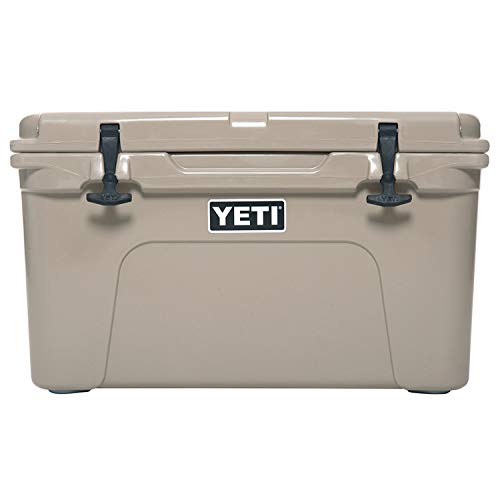
The Tundra 45 defined the modern rotomolded category and remains the reference point for build quality. Its one-piece shell has no seams to split, the corners are thick enough to take drops off a tailgate, and the freezer-style lid gasket seals against rubber T-latches that pull the lid down tight. YETI states up to three inches of its PermaFrost pressure-injected insulation in the walls, and the listing capacity is 26 cans with a recommended two-to-one ice-to-contents ratio.
At 23 pounds empty, this is not a light box, and the thick walls mean the interior is smaller than the exterior suggests. In return you get a cooler that doubles as a seat or step and keeps working season after season. For buyers who want one cooler for a decade, the Tundra 45 is the benchmark the others are measured against.
Specs
– Brand: YETI
– Capacity: 45 quart class (26 cans, as stated)
– Construction: Rotomolded one-piece polyethylene shell
– Insulation: PermaFrost pressure-injected polyurethane foam, up to 3 in in the walls (as stated)
– Empty weight: 23 lbs (as stated)
– ASIN: B001COUOYK
2. Pelican 50QT Elite

Pelican built its name on protective equipment cases, and the Elite line applies the same thinking to ice chests. The 50QT Elite is injection-molded from polypropylene rather than rotomolded, which keeps the shape precise, while two inches of polyurethane foam insulation fills the walls. Pelican claims up to eight days of ice retention under its test conditions, and backs the cooler with a lifetime guarantee.
Details are where this cooler stands out: press-and-pull latches that open easily with gloves on, molded-in handles, an integrated bottle opener in the lock hasp, a fish scale molded into the lid and a sloped floor that drains toward a tethered plug. At just over 26 pounds empty it is a two-hand carry when loaded, but for anglers who value hardware and warranty over wall thickness, it is a compelling alternative to the rotomolded default.
Specs
– Brand: Pelican
– Capacity: 50 quarts (as stated)
– Construction: Injection-molded polypropylene body, stainless steel hardware
– Insulation: Polyurethane foam, 2.00 in thick (as stated)
– Empty weight: 26.39 lbs (as stated)
– ASIN: B07NTY22HG
3. RTIC 52 QT Ultra-Light
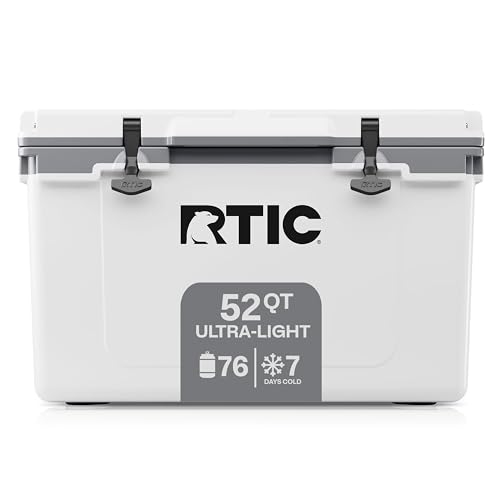
RTIC’s Ultra-Light line exists for people who like rotomolded ice life but not rotomolded weight. The 52 quart model uses an injection-molded body with up to three inches of closed-cell foam insulation, and RTIC states it is more than 30 percent lighter than rotomolded coolers of the same capacity: 21 pounds empty for a true-to-size 52 quart chest that the listing says holds up to 76 cans.
You give up a little of the overbuilt feel of a rotomolded shell. In exchange, this is a cooler one person can genuinely carry loaded, slide into a car trunk without help and still trust for a long weekend. For road trips and boat use where the cooler moves often, that weight saving matters most, and it makes the Ultra-Light the easiest recommendation here for solo campers.
Specs
– Brand: RTIC
– Capacity: 52 quarts (up to 76 cans, as stated)
– Construction: Injection-molded hard body, marketed as 30% lighter than rotomolded coolers
– Insulation: Closed-cell foam, up to 3 in (as stated)
– Empty weight: 21 lbs (as stated)
– ASIN: B09FRQFQ4H
4. Igloo BMX 52

The BMX 52 is the value pick of this group, built around a heavy-duty blow-molded shell with reinforced base and kick plates where coolers usually get scuffed and cracked. Igloo fills the extra-thick walls and lid with foam and claims up to five days of ice retention at 90 degrees Fahrenheit, a more honestly framed claim than most. The listing capacity is 83 cans.
Hardware is better than the price class suggests: rubberized T-latches, oversized hinges with stainless steel screws, swing-up handles with stainless reinforcement, and a threaded drain plug that accepts a garden hose. It will not match the fit and finish of the YETI or Pelican, but for backyard parties, youth sports and a few camping weekends a year, it covers the job at a fraction of the premium cost.
Specs
– Brand: Igloo
– Capacity: 52 quarts (83 cans, as stated)
– Construction: Heavy-duty blow-molded shell with reinforced base and kick plates
– Insulation: Extra-thick foam walls and insulated lid (as stated)
– Empty weight: Not stated
– ASIN: B08B6ZDFL4
5. Coleman 70-Quart Xtreme

Coleman’s Xtreme line is the long-running budget answer to premium coolers, and the 70-quart chest is the one to buy when volume matters more than expedition-grade toughness. The Xtreme design pairs an insulated lid with extra foam insulation in the walls, and Coleman claims up to five days of ice retention. The interior holds up to 100 cans according to the brand, with room for two-liter bottles standing upright, and the lid is sturdy enough to serve as a seat.
The trade-offs are expected: a thinner molded shell than the rotomolded picks, simpler hinges and latches, and handles meant for two-person carries rather than daily abuse. None of that matters much for a few big weekends a year: family reunions, team tailgates and hunting camp. If you need maximum cold storage for the least money and can accept a cooler that is a tool rather than a heirloom, the Xtreme 70 is the sensible end of this list.
Specs
– Brand: Coleman
– Capacity: 70 quarts (up to 100 cans, as stated)
– Construction: Molded hard-sided chest with Have-A-Seat lid
– Insulation: Xtreme insulated lid and extra wall insulation (as stated)
– Empty weight: Not stated
– ASIN: B00FQT6BQW
Quick Comparison
| Cooler | Capacity | Construction | Insulation | Empty weight | ASIN |
|---|---|---|---|---|---|
| YETI Tundra 45 | 45 qt class | Rotomolded | Polyurethane foam, up to 3 in | 23 lbs | B001COUOYK |
| Pelican 50QT Elite | 50 qt | Injection-molded polypropylene | Polyurethane foam, 2 in | 26.39 lbs | B07NTY22HG |
| RTIC 52 QT Ultra-Light | 52 qt | Injection-molded | Closed-cell foam, up to 3 in | 21 lbs | B09FRQFQ4H |
| Igloo BMX 52 | 52 qt | Blow-molded | Foam walls and lid | Not stated | B08B6ZDFL4 |
| Coleman 70-Quart Xtreme | 70 qt | Molded chest | Insulated lid, extra wall insulation | Not stated | B00FQT6BQW |
FAQ
Is a rotomolded cooler worth it over a regular hard cooler?
It depends on use. Rotomolded shells survive drops, stacking and years of abuse better than thinner molded shells, and usually hold ice longer thanks to thicker foam. If you camp a few weekends a year, an injection-molded or blow-molded cooler such as the RTIC or Igloo above delivers most of the performance for far less money and weight.
How long will ice actually last in these coolers?
Manufacturer claims range from five to eight days, but real results vary with ice quality, how full the cooler is, ambient temperature and how often the lid opens. Pre-chilling the cooler, mixing block and cubed ice and keeping it in shade will get you closer to the claimed figures than the cooler model alone.
What size hard cooler should I buy?
For one or two people on a weekend, 45 to 52 quarts is the practical range. For groups of four or more, or trips longer than three days, step up to the 70 quart class and plan on two people to carry it loaded.
Can I use dry ice in a hard cooler?
Most hard coolers tolerate dry ice, but it can make some plastics brittle over time and the lid should not be sealed airtight, since sublimating dry ice releases gas. Check the manufacturer’s guidance for your model, and never touch dry ice with bare hands.
How do I clean a hard cooler after a trip?
Empty meltwater through the drain plug, wash the interior with warm water and mild dish soap, and use baking soda for odors. Dry it fully before storage, with the lid ajar so the gasket keeps its shape.
Conclusion
For most people, the choice comes down to how the cooler will actually be used. The YETI Tundra 45 is the buy-it-for-a-decade rotomolded standard. The Pelican 50QT Elite trades some wall thickness for excellent hardware and a lifetime guarantee. The RTIC 52 Ultra-Light is the pick when loaded weight matters, the Igloo BMX 52 is the rugged budget option, and the Coleman 70-Quart Xtreme wins when you need the most cold storage for the least money. Match the construction to your trips, and any of the five will serve you well.
More from Amazon
Programs that pair well with the guide above. Offers and eligibility are set by Amazon and may change.
Free shipping on eligible items, Prime Video and more. Eligible new members can start with a free trial.
Start a Prime free trialAudiobooks and podcasts to listen to on the go. Eligible new members can start with a free trial.
Try Audible freeAd-free music streaming. Eligible new subscribers can start with a free trial.
Try Music Unlimited freeA free business account with business pricing and bulk-buying tools for work, shop or home office.
Create a business accountAs an Amazon Associate we earn from qualifying purchases.


Write Your Review
No reviews yet. Be the first to share your experience!