
Our Short List of 3

- Best for: All-round stall use
- 36 inches long
- 1 to 1.5-inch holes
- Durable synthetic rope
- Suits horses, goats, and livestock

- Best for: Trailers and travel
- Two 42-inch nets
- 2 by 2-inch holes
- Holds 3 to 5 flakes per net
- Soft, strong 4T poly wire

- Best for: Hard-wearing daily use
- Holds 2 to 3 flakes of hay
- 1.75-inch square openings
- Reinforced overlapping nylon webbing bottom
- Heavy-duty reinforced nylon
All 5 Picks at a Glance
| Product | Specs | Action |
|---|---|---|
| Weaver Leather Slow Feed Hay Net |
| Check price on Amazon |
| Majestic Ally Slow Feed Hay Net 2-Pack |
| Check price on Amazon |
| Derby Originals Front Web Slow Feeder Hay Bag |
| Check price on Amazon |
 T TEKE Classic Slow Feed Hay Net 2-Pack |
| Check price on Amazon |
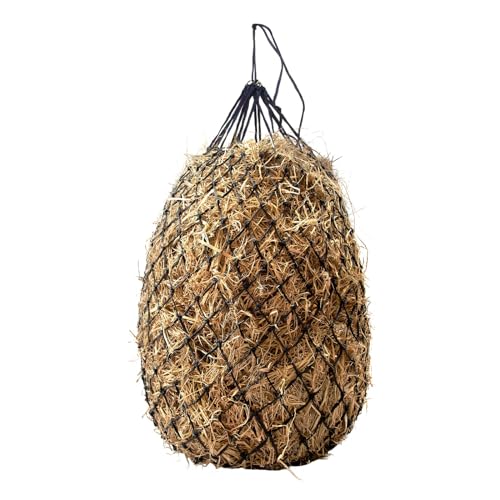 Bloomoak Slow Feed Hay Net |
| Check price on Amazon |
Key takeaways
- Compare five hay nets for horses, from small-hole slow feeders to large-capacity nets, and slow down feeding while cutting waste in the stable.
A flake tossed on the stall floor turns into bedding in minutes. A horse that finishes in twenty minutes then stands with an empty gut, and the trampled half of every flake goes to waste. A slow feed hay net changes the rhythm: the horse pulls hay through small holes, so one filling lasts for hours and far less ends up in the dirt. The five nets below cover the full range, from a tight one-inch mesh for a horse that bolts its feed to a roomy two-pack for a trailer weekend.
Every pick below was checked against a fresh tracker offer or a recent roundup check in late November 2026. One listing, the Bloomoak, rests on a roundup check from November 12, so confirm availability on its listing before ordering. Hole size matters more than brand here, so match the mesh to the horse in front of you, not to the net with the most fans.
Quick Picks
As an Amazon Associate we earn from qualifying purchases
| Product | Best for | Key spec from title |
|---|---|---|
| Weaver Leather Slow Feed Hay Net | All-round stall use | 36-inch net with 1 to 1.5-inch holes |
| Majestic Ally Slow Feed Hay Net 2-Pack | Trailers and travel | Two 42-inch nets with 2-inch holes |
| Derby Originals Front Web Slow Feeder Hay Bag | Hard-wearing daily use | Bag with a reinforced tough bottom |
| T TEKE Classic Slow Feed Hay Net 2-Pack | Two stalls or a spare | Two 40-inch nets with 2-inch holes |
| Bloomoak Slow Feed Hay Net | Slowest feeding | 40-inch net with 1-inch holes |
How to Choose
Hole size sets the pace
Hole size is the single choice that shapes feeding time. A two-inch mesh slows a horse without frustrating it, which makes it the right opening move for a horse new to nets. A one-inch mesh doubles the work and suits a horse that bolts hay, an easy keeper on a strict ration, or a metabolic case where every mouthful needs pacing. The trade is patience: tight holes load slowly, and coarse, stemmy hay fights its way through a one-inch grid. If the horse has never met a net, begin with two inches and step down only after a few calm weeks. A net that frustrates the horse gets ignored, and an ignored net saves nothing.
Length and capacity decide refills
Length decides how much hay one filling holds and how often you walk back to the stall. A 36-inch net takes about two to three flakes, enough for a stall stay or a show day. A 42-inch net swallows three to five flakes, which covers a long trailer ride or an overnight stay without a midnight refill. Two-packs change the math again: fill one while the other hangs, and keep a clean spare for the trailer. Check the listing for the stretched length, since a net measured slack reads shorter than the same net pulled taut. Capacity also sets the hang height, because a full net hangs lower than an empty one.
Rope, webbing, and build quality
A net lives or dies by its cord. Synthetic rope resists fraying and holds its hole shape through daily tugging, while a loose weave stretches and opens up until the slow feed effect fades. Hand-tied knots add grip and keep the mesh honest, and a thick drawstring makes hanging and carrying easier on cold mornings. Bag-style feeders trade rope for reinforced nylon webbing and a tough bottom, which suits a horse that chews through cord. Look for replaceable straps and snaps, since a worn strap should not end the life of an otherwise sound bag. Machine-washable cord is a quiet bonus after a muddy week.
Hanging safely every time
A hay net hung wrong is a hazard, so the hanging routine matters as much as the net itself. Hang every net high and tight, with the bottom well clear of the floor, so a hoof cannot reach the mesh while the horse paws at it. Tie with a quick-release knot and check the cord for fraying every few weeks, since a worn strand snaps under a hard pull. Take the net down once it is empty rather than leaving it to swing in the stall. Horses that wear shoes face the highest risk, so keep their nets higher than a barefoot horse needs. A few seconds of care at hanging time prevents the accident everyone dreads.
The 5 Best Options
Weaver Leather Slow Feed Hay Net
- Best for: All-round stall use
- 36 inches long
- 1 to 1.5-inch holes
- Durable synthetic rope
- Suits horses, goats, and livestock
All-round stall use
The tight mesh loads slowly, so stuffing coarse hay through one-inch holes takes patience.
The Weaver is the workhorse of this group, a 36-inch synthetic rope net with small holes that turn a fast eater into a grazer. The listing puts the holes at one to one and a half inches, which sits at the restrictive end of the shelf and stretches a single filling across most of the day. It suits horses and goats alike, and the compact length hangs neatly on stall bars or in a trailer without dragging low as the net empties. Five colorways help a busy barn sort nets per horse at a glance. Keep a spare in the trailer, since the low cost makes doubling up easy.
Majestic Ally Slow Feed Hay Net 2-Pack
- Best for: Trailers and travel
- Two 42-inch nets
- 2 by 2-inch holes
- Holds 3 to 5 flakes per net
- Soft, strong 4T poly wire
Trailers and travel
The two-inch holes run roomier than the tightest nets, so a confirmed hay-bolter may still eat quickly.
The Majestic Ally pair is the value play of this shelf: two 42-inch nets for about the cost of one premium bag. Each net holds three to five flakes, and the two-inch holes hit the middle ground that suits most horses moving to slow feeding for the first time. Nine farm-friendly colors make it easy to match barn colors or sort nets per horse, and the adjustable nylon rope hang adapts between a trailer wall and a roomy stall. A two-pack also means one net is always drying while the other works. For a multi-horse household, this pair covers two stalls in one purchase.
Derby Originals Front Web Slow Feeder Hay Bag
- Best for: Hard-wearing daily use
- Holds 2 to 3 flakes of hay
- 1.75-inch square openings
- Reinforced overlapping nylon webbing bottom
- Heavy-duty reinforced nylon
Hard-wearing daily use
It costs the most of the five, so weigh the tough bottom against a cheaper rope net for a gentle eater.
The Derby Originals is the only bag-style feeder here, and it earns its place on build quality alone. A front web with 1.75-inch square openings sits over a reinforced overlapping nylon bottom, so dust and debris fall through while the hay stays put. It holds two to three flakes of Timothy, Orchard, or Alfalfa, and the heavy-duty reinforced nylon stands up to a horse that chews through rope. Hanging straps and snaps are replaceable, which extends the bag well past a worn strap. A six-month warranty backs the build. It costs the most of the five, and the toughness explains why.
T TEKE Classic Slow Feed Hay Net 2-Pack
- Best for: Two stalls or a spare
- Two 40-inch nets
- 2-inch mesh holes
- 520 hand-tied knots
- Thick 6-millimeter drawstring
Two stalls or a spare
Two-inch holes suit most horses, but a horse that bolts hay may need a tighter mesh.
The T TEKE pair brings hand-tied craft to a budget two-pack. Each net runs 40 inches long with two-inch mesh holes, and 520 hand-tied knots hold the grid honest through daily pulling. A thick six-millimeter drawstring makes the net easy to carry and hang, and the soft, tough polyethylene cord stays gentle on the muzzle while resisting wear. One filling holds about 14.3 pounds of hay, enough for a long stall stay. With two nets in the pack, fill one while the other hangs, or cover two stalls at once. It is the straightforward choice for a barn that wants a spare always ready.
Bloomoak Slow Feed Hay Net
- Best for: Slowest feeding
- 40 inches long
- 1-inch holes
- Heavy duty PE
- Handwoven 8-strand construction
Slowest feeding
The tightest mesh here, so allow a few days for a horse new to slow feeding to settle in.
The Bloomoak carries the smallest holes in this group at one inch, which makes it the pick for a horse that bolts every flake. The 40-inch net is handwoven from heavy duty PE in eight strands, and rings at the top make filling easier than wrestling a drawstring shut. The listing says it suits horses and goats, and the tight mesh doubles consumption time, which helps digestion and keeps an easy keeper on ration. Expect a short adjustment period at first. Confirm availability on the listing before ordering, since this pick rests on a roundup check from November 12 rather than a fresh tracker offer.
Which One Fits Your Situation
A horse that bolts every flake
Pick the Bloomoak. Its one-inch holes slow intake more than any other net here, and the handwoven PE holds up to a determined eater. Give the horse a few days to learn the rhythm, and hang the net high so the horse works at it rather than pawing it. If the horse still rushes, pair the net with smaller, more frequent fillings rather than one big load.
A first slow feeder for a new horse
Begin with the Majestic Ally two-pack. Two-inch holes slow the horse without the frustration of a one-inch grid, and the 42-inch length holds enough for a full stall stay. The pair gives you a spare for the trailer, and the adjustable rope hang fits both stall bars and trailer walls. Step down to a tighter mesh only after a few calm weeks.
Two stalls, one trailer, or a show weekend
Take a two-pack. The T TEKE pair covers two stalls at once, and the Majestic Ally pair does the same with longer nets and more colors for sorting per horse. Fill one while the other hangs, keep a clean spare in the trailer, and rotate nets so each one dries between uses. A pair also covers a show weekend without a mid-trip wash.
A horse that chews through cheap rope
Choose the Derby Originals bag. Reinforced nylon webbing and a tough bottom outlast cord on a horse that gnaws its gear, and replaceable straps mean a chewed strap does not end the bag. The front web keeps the slow feed effect while the tough bottom takes the abuse. It costs more than a rope net, and for a confirmed chewer the extra life pays for itself.
Common Mistakes
- Hanging a net low and loose, where a hoof can catch the mesh.
- Choosing one-inch holes for a horse that has never met a net, then giving up when the horse refuses it.
- Forcing coarse, stemmy hay through a tight mesh and calling the net hard to fill.
- Leaving an empty net swinging in the stall instead of taking it down once the hay is gone.
- Buying a feeder, manger, or rack when the job calls for a net or a bag.
Frequently Asked Questions
How small should the holes be for a horse new to slow feeding?
Two inches is the right opening move. It slows intake enough to cut waste and stretch a filling, without the frustration a one-inch grid brings on day one. After a few calm weeks, step down to a tighter mesh if the horse still rushes its feed. A net the horse refuses saves nothing, so let the horse learn the game first.
Can one net cover a full day in the stall?
A 42-inch net holding three to five flakes can carry most horses through the day, and a two-pack makes it easy to swap a full net for an empty one. A 36-inch net covers a stall stay or a show day, but a heavy eater may need a refill. Match the length to the horse and the hours between fillings.
How high should I hang a hay net?
High and tight, with the bottom well clear of the floor. A loose, low net can catch a hoof while the horse paws at it, and horses that wear shoes face the highest risk. Tie with a quick-release knot so you can drop the net in seconds, and check the cord for fraying every few weeks.
Do hay nets work for ponies and goats too?
Yes, with the right hole size. Ponies and goats do well on the same nets horses use, and the Weaver listing names horses, goats, and livestock outright. A small pony may suit a shorter net, while a goat needs the same high, tight hang as a horse. Watch the first few fillings to see that the animal can pull hay through the mesh without strain.
FAQ
How small should the holes be for a horse new to slow feeding?
Can one net cover a full day in the stall?
How high should I hang a hay net?
Do hay nets work for ponies and goats too?
More from Amazon
Programs that pair well with the guide above. Offers and eligibility are set by Amazon and may change.
Free shipping on eligible items, Prime Video and more. Eligible new members can start with a free trial.
Start a Prime free trialAudiobooks and podcasts to listen to on the go. Eligible new members can start with a free trial.
Try Audible freeAd-free music streaming. Eligible new subscribers can start with a free trial.
Try Music Unlimited freeA free business account with business pricing and bulk-buying tools for work, shop or home office.
Create a business accountAs an Amazon Associate we earn from qualifying purchases.
Write Your Review
No reviews yet. Be the first to share your experience!