
Key takeaways
- Brush door sweep vs rubber door sweep: compare the seal, floor fit, gap size and fitting method to pick the right draft seal for your door this winter.
A door sweep has one job: close the gap under a door so cold air stays outside. Choosing between a brush sweep and a rubber sweep comes down to the floor under the door, the size of the gap, and how the door gets used every day. A brush sweep uses flexible bristles that bend over uneven floors and thresholds, while a rubber sweep presses a solid blade against the floor for a tighter seal. Pick the wrong type and the sweep drags, curls, or leaves a gap at the corners, so the draft you wanted to stop keeps coming through.
This guide is for renters sealing a bedroom door, homeowners fixing a drafty front door, and anyone sorting out a garage or basement entry before winter. It compares two brush sweeps and two rubber sweeps, chosen from the names and specifications on their Amazon product pages, and shows which type fits each door and floor in your home.
Quick Picks
As an Amazon Associate we earn from qualifying purchases.
| Product | Best for | Key spec from title |
|---|---|---|
| Frost King SB36W Brush Sweep | Uneven floors and older doors | 2 in wide, 36 in long, white aluminum, brush seal |
| Randall Aluminum Brush Sweep | Large gaps up to 1 1/2 inches | 36 in long, 1 1/2 in brush, clear satin anodized aluminum |
| Camel Home Rubber Sweep | A quick adhesive fix on interior doors | Rubber, 2 in wide x 39 in long, self-adhesive, 2-pack |
| GroTheory Rubber Sweep | Sealing two doors with one pack | 2-pack, white, 2 in wide x 39 in long, weather stripping seal |
How to Choose
Match the sweep to the floor surface
Begin with the floor, because the floor decides which seal works. Bristles flex and ride over bumps, grout lines, and worn boards, so a brush sweep keeps contact on an uneven surface where a stiff blade would skip and leave gaps. Rubber works best on a smooth, flat floor, such as sealed wood, laminate, or tile, where the blade can press evenly along its full length. If the floor changes height near the threshold, or the door swings over a rug, bristles forgive the change while rubber catches and drags. Walk the door slowly and watch the bottom edge to see where the floor rises or dips.
Measure the gap before you buy
Measure the gap at three points: near the hinges, in the middle, and near the handle. Doors sag, floors slope, and a gap that measures half an inch on one side can reach a full inch on the other. A brush sweep suits larger gaps because long bristles bridge the space without jamming the door, while a rubber sweep suits a small, even gap where the blade only needs to bend slightly. Check the door width too, since most sweeps come in 36-inch or 39-inch lengths and need trimming to fit. Write the three measurements down before you shop, and buy the sweep that covers the largest one.
Think about wear and how the door moves
A sweep wears out where it rubs the floor, so think about how often the door opens. Bristles bend thousands of times without snapping, which suits a busy front door or a garage entry. Rubber blades can take a set, curl at the ends, or drag on rough concrete, and a blade that drags makes the door hard to push. A rubber blade blocks light and fine dust more completely than bristles when the door stays shut most of the time. If pets push through the door or the sweep crosses a rough threshold, bristles cope better; if the door opens rarely, rubber holds its shape longer.
Choose a fitting method you can live with
Sweeps fix to the door in two ways: screws through an aluminum carrier, or a self-adhesive strip that sticks to the door face. Screws hold firm on exterior doors and heavy use, but they leave holes, which matters in a rented home. Adhesive strips install in minutes with no tools and peel away when you move out, but they grip best on a clean, smooth, painted door and can fail on rough wood or in cold weather. Check whether the sweep can be cut to length, and confirm the fixing suits the door material before you buy.
The 4 Best Options
Frost King SB36W Extra Brush Door Sweep

The Frost King SB36W is the classic brush sweep for a door that never sat quite straight. Its white aluminum carrier holds a brush that bends over bumps and dips, so it keeps sealing even when the floor is uneven or the door has sagged a little with age. It suits an older front door, a side door, or any entry where the gap changes from one side to the other. The 36-inch length fits a standard door and trims down for narrower ones, which makes it a straightforward pick for a first draft-sealing job.
Specs
- 2 in wide x 36 in long
- White aluminum carrier
- Brush seal
- Model SB36W
Best for: an older front door with an uneven floor and a gap that changes along its length.
Watch out for: measure the gap at the hinge side and the handle side first, since a brush that is too short leaves the corners open.
Randall Manufacturing Aluminum Brush Door Sweep

The Randall brush sweep is built for the widest gaps. Its 36-inch aluminum carrier holds a 1 1/2-inch brush, so it reaches down to floors that sit well below the door, and the clear satin anodized finish keeps it looking tidy on a painted or varnished door. It suits a drafty exterior door, a garage entry, or a basement door where the gap is too large for a rubber blade to bridge. The long bristles also bend around small bumps in concrete or tile, which keeps the seal working where a stiff blade would skip.
Specs
- 36-inch length
- 1 1/2-inch brush
- Clear satin anodized aluminum
- Seals gaps up to 1 1/2 inches
- USA-made
- Model BS-220-MF
Best for: a drafty exterior door with a large gap that a rubber blade cannot bridge.
Watch out for: check that the door swings freely over the threshold, since a 1 1/2-inch brush needs clearance to move.
Camel Home Self Adhesive Rubber Door Sweep
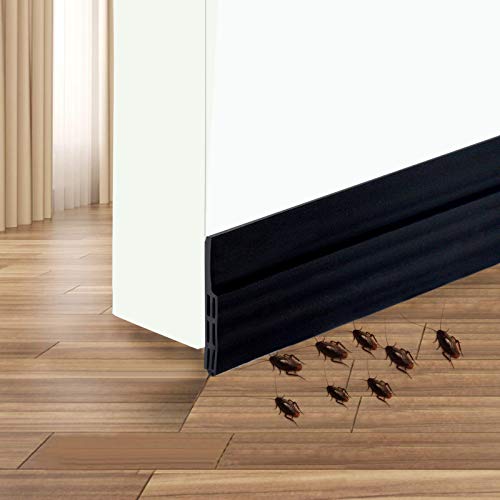
The Camel Home rubber sweep is the quick fix for an interior door. Its self-adhesive strip presses onto the door face with no drilling, so it suits renters and anyone who wants the job done in minutes. The rubber blade runs 2 inches wide and 39 inches long, and the pack holds two strips, so one purchase covers two doors or leaves a spare for later. It suits a bedroom door that lets in hallway light and noise, or a bathroom door where a draft slips under the gap at night.
Specs
- Rubber seal strip
- Self-adhesive backing
- 2 in wide x 39 in long
- 2-pack, black
- For interior doors
Best for: a rented bedroom door that needs a draft seal with no drilling.
Watch out for: clean the door face and let it dry before sticking the strip on, since dust stops the adhesive from gripping.
GroTheory Rubber Door Sweep (2-Pack)

The GroTheory rubber sweep covers two doors in one pack, which suits a home with several drafty interior doors. Each white strip runs 2 inches wide and 39 inches long, and the rubber blade presses flat against a smooth floor for a close seal. It suits a hallway with two bedroom doors, or a living room and a study that both leak cold air. The white finish blends with painted doors, so the sweep stays discreet once it is fitted.
Specs
- 2-pack
- White
- 2 in wide x 39 in long
- Weather stripping seal
Best for: sealing two interior doors at once in a home with several drafty rooms.
Watch out for: check the floor is smooth and flat first, since a rubber blade skips over bumps and leaves gaps.
Which One Fits Your Situation
A front door with a wide, uneven gap
The Randall brush sweep is the pick here. Its 1 1/2-inch bristles reach a floor that sits well below the door, and they bend over bumps in concrete or tile instead of skipping. The Frost King SB36W works as the second choice when the gap is smaller and the floor only dips a little.
A bedroom door in a rented flat
The Camel Home rubber sweep fits this situation best. It sticks on with no drilling, so the door goes back to its original state when you move out, and the rubber blade blocks light and hallway noise as well as cold air. Keep the second strip from the pack as a spare for another door.
A smooth floor where a quiet seal matters
The GroTheory rubber sweep is the pick for a smooth wood or laminate floor. Its blade presses evenly along its full length, so it seals light and fine dust that bristles can miss, and it runs quietly when the door moves. Choose the Camel Home sweep instead when you only need to seal one door and want the adhesive fixing.
Two or more drafty interior doors
Buy the GroTheory 2-pack and seal both doors with one purchase. Each strip covers a standard interior door, and the white finish suits painted doors in a hallway or landing. If the gaps are large or the floors are uneven, switch to the Frost King brush sweep for the worst door and use the rubber strips on the rest.
Common Mistakes
- Buying a sweep without measuring the gap at three points along the door.
- Fitting a rubber blade on an uneven floor, where it skips and leaves gaps.
- Sticking an adhesive sweep onto a dusty or damp door face, so it peels away.
- Choosing a brush that is too short, so the corners of the gap stay open.
- Forgetting to check that the door still swings freely after the sweep is fitted.
Frequently Asked Questions
Does a brush sweep or a rubber sweep seal better?
A rubber sweep seals better on a smooth, flat floor, because the blade presses evenly along its full length and blocks light and fine dust. A brush sweep seals better on an uneven floor, because the bristles bend over bumps and dips that a stiff blade would skip. The floor under the door decides which type wins.
Can a door sweep damage a wood floor?
A sweep can scuff a wood floor when the blade or bristles drag with too much pressure. Set the sweep so it just touches the floor, and check the swing after fitting. Bristles are gentler on soft wood, while a rubber blade needs a light touch and a smooth surface to avoid marks.
How do I measure the gap under my door?
Close the door and slide a ruler under it at the hinge side, in the middle, and at the handle side. Note the largest of the three measurements, then buy a sweep that covers it. A gap that changes along the door usually points to a brush sweep, while an even gap suits a rubber blade.
Can I cut a door sweep to fit a narrow door?
Most sweeps can be cut to length. Trim an aluminum carrier with a hacksaw and cut the brush or rubber blade with strong scissors, then smooth the cut end so it does not catch on the floor. Measure the door width first and mark the cut line before cutting.
FAQ
Does a brush sweep or a rubber sweep seal better?
Can a door sweep damage a wood floor?
How do I measure the gap under my door?
Can I cut a door sweep to fit a narrow door?
More from Amazon
Programs that pair well with the guide above. Offers and eligibility are set by Amazon and may change.
Free shipping on eligible items, Prime Video and more. Eligible new members can start with a free trial.
Start a Prime free trialAudiobooks and podcasts to listen to on the go. Eligible new members can start with a free trial.
Try Audible freeAd-free music streaming. Eligible new subscribers can start with a free trial.
Try Music Unlimited freeA free business account with business pricing and bulk-buying tools for work, shop or home office.
Create a business accountAs an Amazon Associate we earn from qualifying purchases.




Write Your Review
No reviews yet. Be the first to share your experience!