
Key takeaways
- Compare the best stone bath mats for minimalist bathrooms, from fast-drying diatomite slabs to easy-care designs, with sizing, grip and upkeep tips.
A fabric bath mat spends most of its life damp. It bunches at the corners, slides on tile, and needs a wash cycle every few days to stay fresh. A stone bath mat takes the opposite approach: a rigid slab of diatomaceous earth that pulls water off your feet on contact and evaporates it within minutes, so the surface is dry again before the next person showers. There is nothing to launder, nothing to fold, and nothing soft competing with the clean lines of a minimalist bathroom. This guide compares five diatomite stone mats that suit a calm, uncluttered space, and explains the sizing, grip, and upkeep details that separate a good slab from a disappointing one.
As an Amazon Associate, we earn from qualifying purchases.
Quick answer
The Dorai Home Bath Stone in Rain Slate is the most complete pick for most minimalist bathrooms, with a rubberized bottom pad, a subtle engraved pattern, and a standard footprint that fits a single vanity. The Sutera Stone Bath Mat is the practical alternative, bundling a separate grip mat and a sanding tool for long-term upkeep. Every mat below is a rigid diatomite slab in a quiet, neutral finish.
Dorai Home Bath Stone Luxury, Rain Slate

Dorai is the brand that brought the bath stone into the mainstream, and the Rain Slate version shows why. The slab measures 23.6 by 15.4 inches and about 0.4 inches thick, with an engraved rain pattern that channels water across the surface while giving bare feet something to register. The body is diatomite, and a rubberized bottom pad is built into the design rather than left as a loose accessory, so the mat stays planted on smooth tile without a separate layer underneath.
At roughly 4.85 pounds it feels substantial without being awkward to lift for cleaning the floor beneath it. The slate finish is the right register for a minimalist bathroom: dark, matte, and quiet next to white or pale fixtures. Dorai also sells larger modular and Zen variants, but the standard Rain stone is the one that fits an ordinary single-vanity floor plan. One caution from the maker is worth repeating: the slab contains diatomaceous earth, so keep it on a flat, stable surface and handle any sanding or sweeping of stone dust with care.
Sutera Stone Bath Mat, Charcoal Grey

The Sutera mat is the utilitarian option in this group. It measures 23.5 by 15 inches in a charcoal grey finish, with an engraved multi-level pattern across the top that is there for grip as much as looks. Where Dorai bonds its pad to the slab, Sutera ships a separate slip-resistant mat that sits underneath, plus a sanding tool in the box. That sanding tool matters more than it sounds: after months of use, soap and mineral residue can seal the pores of any diatomite surface, and a light buffing restores the absorbency.
The trade-off for the lower-key design is a slightly heavier slab at about 5.7 pounds and a two-piece setup that takes a moment to align. In return you get a mat that is easy to refresh instead of replace, and a footprint that suits a standard tub or shower exit. The charcoal color also hides the faint footprint marks that show up on pale stone between cleanings, which makes it a forgiving choice for a busy household bathroom.
Momo Lifestyle Drytomita Stone Bath Mat, Graphite Gray

Momo Lifestyle earns its place here for transparency. Most brands print a single material word on the listing; Momo states the full mix of the Drytomita: diatomaceous earth, wood and vegetable fiber, and hydrated lime. That composite is pressed into a smooth, ungrooved slab measuring 23.6 by 15.4 inches and 0.35 inches thick, the slimmest profile in this guide. The brand deliberately skips deep grooves, arguing they weaken the core and trap dirt, so the surface reads as one calm, flat plane of graphite gray.
The mat weighs about 2 kilograms, noticeably lighter than the Dorai or Sutera, which makes it the easiest here to move for mopping. A sandpaper sheet is included for refreshing the surface, and the brand backs the mat with a one-year warranty, a rarity among stone mats. If your bathroom has a low-clearance door swinging over the mat, this thin profile is the one most likely to clear it. A larger Grande size exists for double vanities, in the same two gray shades.
TOSORO Stone Bath Mat, Sandstone

Most stone mats come in some shade of gray. TOSORO is the pick for bathrooms that lean warmer: the Sandstone finish is a soft beige that sits better with cream tile, pale wood, and brushed brass than any charcoal slab. The mat measures 23.5 by 15 inches, the standard single-person footprint, and the brand offers the line in a wide range of colors and surface designs, including wave and marble patterns, for anyone coordinating with an existing scheme.
Functionally it follows the same diatomite recipe as the rest of this guide: water is drawn into the porous surface on contact and evaporates quickly, leaving the slab dry to the touch. The brand suggests rinsing the mat under the shower to refresh it, which suits the minimalist habit of owning fewer, simpler things that are easy to maintain. Two-piece sets are also sold for households with a second bathroom. Choose the plain Sandstone over the patterned designs if the goal is a quiet floor; the engraved options read busier than a minimalist room usually wants.
madesmart Drying Stone Bath Mat, Natural Gray

Madesmart is better known for drawer organizers than bathroom goods, and that background shows in this mat: it is the plainest object in this guide, in a good way. The Drying Stone measures 24 by 16.25 inches, a touch more coverage than the standard slabs, in an unadorned natural gray with no pattern at all. The body is diatomite, the care instruction is spot clean only, and at about 4.88 pounds it stays where you put it.
That extra inch of width makes a real difference in front of a wide shower door, where the standard 15-inch mats can leave a wet heel on the tile. The unpatterned surface is also the easiest to wipe down, since there are no grooves to collect residue. What you give up is the bundled extras: there is no separate grip pad or sanding tool headline here, so check what is in the box if underlay grip on polished stone floors is a concern. For a rental bathroom or a first stone mat, the simplicity is the point.
How to choose
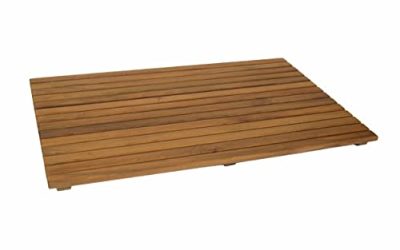
Start with size. The standard stone footprint is about 23.5 by 15 inches, enough for one person stepping out of a tub or shower. Measure your exit zone before ordering: a double vanity or a wide shower door may justify a large-format mat, while a small guest bath may need the standard slab placed lengthwise. Check door clearance too. These mats run from about 0.35 to 0.4 inches thick, and a door that barely clears a fabric rug can scrape a rigid slab.
Next, think about grip as a system. A stone mat stays put through its own weight plus whatever sits beneath it: a bonded rubberized pad, a separate grip mat, or nothing but the slab. On polished tile or smooth stone floors, favor a design with a pad included, and never place a bare slab on a wet, sloped surface.
Material blends vary more than the marketing suggests. Pure diatomite slabs absorb aggressively but can feel chalky; composites that add fiber and lime tend to be smoother and a little harder wearing. Either way, upkeep is the same rhythm: rinse or wipe the surface, let it dry standing on its edge now and then, and sand lightly when absorbency fades. Avoid harsh cleaners and oils, which can seal the pores. Finally, treat the stone with reasonable care: it is rigid and can chip or crack if dropped on tile or struck by a heavy bottle, and the fine dust from sanding should be swept up rather than breathed in.
Who should skip
Skip stone mats if you love the feel of a plush rug underfoot. A diatomite slab is cool, hard, and flat; it solves a moisture problem rather than adding comfort, and no finish changes that. Skip them if your household includes anyone unsteady on their feet who needs a soft, forgiving surface, or if toddlers regularly climb out of the tub onto the mat area, since a fall onto stone is worse than a fall onto fabric. They are also a poor fit for bathrooms where the mat must bend around a pedestal base or be tossed in a closet daily, and for anyone who knows they will not do the occasional rinse-and-sand upkeep. A wooden slatted mat or a quick-dry fabric mat will serve those homes better.
FAQ
How long does a stone bath mat take to dry?
The surface of a diatomite mat typically looks dry within a few minutes of use, because the water spreads through the porous body and evaporates rather than sitting on top. In a humid bathroom with little airflow, full drying takes longer. Standing the mat on its edge occasionally, and keeping the room ventilated, keeps drying times short.
Can a stone bath mat crack or break?
Yes. The slabs are rigid and can chip at the corners or crack if dropped onto a hard floor or hit by something heavy. Handle the mat with two hands when moving it, keep it on a flat surface, and avoid placing it where bottles are likely to fall from a height. A cracked slab still absorbs, but it will not sit flat.
How do you clean a stone bath mat?
Day to day, a wipe with a damp cloth or a rinse under the shower is enough. If stains appear or absorbency fades, let the mat dry fully, then sand the surface lightly with the included tool or a fine sandpaper sheet to reopen the pores. Do not use bleach, oils, or waxy cleaners, which can coat the surface and stop it absorbing.
Is a stone bath mat slippery when wet?
The top surface is designed for grip, with engraved patterns or a fine matte texture that holds bare feet better than smooth tile. The bigger risk is the whole slab sliding on a polished floor, which is why pads and grip mats matter. Always set the mat on a flat, dry floor and step onto its center rather than an edge.
Final verdict
For most minimalist bathrooms, the Dorai Home Bath Stone in Rain Slate is the buy: bonded grip, a restrained pattern, and the standard footprint that fits ordinary floor plans. The Sutera is the close alternative if you value the included sanding tool and a separate grip mat, while the Momo Drytomita suits anyone who wants the slimmest slab and an honestly stated material mix. TOSORO covers warm-toned rooms, and the madesmart covers wide shower doors with the plainest design of all. Any of the five replaces a damp fabric rug with a dry, quiet slab.
Product and ASIN Reference
| Product | ASIN |
|---|---|
| Dorai Home Bath Stone Luxury, Rain Slate | B09ZP5GHNQ |
| Sutera Stone Bath Mat, Charcoal Grey | B09C1JKHSN |
| Momo Lifestyle Drytomita Stone Bath Mat, Graphite Gray | B09M1CC5Z8 |
| TOSORO Stone Bath Mat, Sandstone | B0BW4LV4HT |
| madesmart Drying Stone Bath Mat, Natural Gray | B0F9MNPTS9 |
FAQ
How long does a stone bath mat take to dry?
Can a stone bath mat crack or break?
How do you clean a stone bath mat?
Is a stone bath mat slippery when wet?
More from Amazon
Programs that pair well with the guide above. Offers and eligibility are set by Amazon and may change.
Free shipping on eligible items, Prime Video and more. Eligible new members can start with a free trial.
Start a Prime free trialAudiobooks and podcasts to listen to on the go. Eligible new members can start with a free trial.
Try Audible freeAd-free music streaming. Eligible new subscribers can start with a free trial.
Try Music Unlimited freeA free business account with business pricing and bulk-buying tools for work, shop or home office.
Create a business accountAs an Amazon Associate we earn from qualifying purchases.


Write Your Review
No reviews yet. Be the first to share your experience!