
Key takeaways
- Compare linen vs cotton throw pillow covers for sofas and beds, covering texture, durability, care and look, with five picks for each style.
Throw pillow covers are the fastest way to change the feel of a sofa or a bed without replacing any furniture. The fabric choice shapes everything else: how the pillow feels against skin, how it holds up to daily use and washing, and whether the room reads relaxed or polished. Linen and cotton are the two natural fabrics most shoppers compare, and they behave quite differently in real rooms. Linen brings visible texture, a slightly crisp hand, and a relaxed, lived-in look that suits farmhouse, coastal, and Scandinavian spaces. Cotton brings a smoother surface, softer first touch, and easier care, which suits busy family rooms and beds that get remade every day. This guide compares the two fabrics across texture, durability, care, and appearance, then walks through five real covers: three linen options and two cotton options, so the trade-offs are easy to judge side by side.
As an Amazon Associate, we earn from qualifying purchases.
Quick answer
Choose linen throw pillow covers for a textured, relaxed look, strong fibers, and a fabric that softens gradually while keeping its character. Choose cotton covers for a smoother feel, simpler washing, and a neater finish on beds and family sofas. Both fabrics breathe well and work year round. The best choice depends on tolerance for wrinkles, how often covers get washed, and the style of the room.
Linen options
Foindtower Decorative Linen Throw Pillow Covers, Set of 2
The Foindtower set is a useful starting point for the linen side because the fabric is a ramie linen blended with cotton, sold as a pair of square covers for standard sofa and bed inserts. Ramie is a natural plant fiber closely related in character to flax linen, and it gives the cover its dry, textured hand and visible weave. The cotton share in the blend softens the surface slightly, so the cover feels less stiff than a pure flax cover can feel when new. Styling leans farmhouse and boho, with solid colors that layer well over patterned throws and plain upholstery alike. The covers suit living room sofas, accent chairs, and bed styling where a relaxed texture is the goal. Because the weave is open and natural in appearance, small creases read as part of the design rather than as flaws. Shoppers who want the linen look with a gentler feel often land on a blend like this one, since it keeps the slubbed texture while reducing the scratchiness some people notice with coarse linen. It is a decorative cover set, so inserts are supplied separately and sizing should be checked against existing pillows before ordering.
DEZENE Linen Pillow Covers, Pack of 2
The DEZENE covers present linen in a more tailored direction, with a striped, textured surface and a neutral beige tone designed for farmhouse and boho rooms. The stripes are woven into the fabric rather than printed on top, which gives the pillow face subtle depth when light moves across the sofa during the day. Sold as a pack of two in a standard square size, the set works as a matched pair on a sofa or split between a sofa and an accent chair for a coordinated look. The linen face delivers the breathable, slightly crisp feel the fabric is known for, and the neutral palette pairs easily with leather, cotton upholstery, and wood furniture. On a bed, the striped texture adds interest to plain white or solid bedding without introducing a bold pattern that competes with a duvet. Linen fibers are naturally strong, and a woven stripe construction tends to hide everyday wear well because the eye reads the texture first. This is a sensible pick for anyone who wants linen character with a slightly more structured, finished appearance than a plain slubbed cover offers.
MIULEE Decorative Linen Pillow Covers, Pack of 2
The MIULEE covers round out the linen group with a larger square format and a khaki tone that fits boho, farmhouse, and modern rustic rooms. The listing describes a natural ramie linen blend, and the fabric shows the characteristic uneven yarns that give linen its organic, relaxed surface. The bigger size suits deep sofas, sectionals, and Euro-style bed arrangements where smaller covers can look lost. Khaki works as a grounding neutral between white bedding and darker wood or leather furniture, and the solid color keeps the focus on texture rather than pattern. Like most linen covers, these will show creases after washing and after long use on a sofa, which is part of the fabric identity rather than a defect. Linen also handles warm rooms well because the weave allows air to move, so pillows stay comfortable to lean against in summer. For shoppers building a layered bed with mixed sizes, a larger linen cover at the back row adds height and texture behind smaller cotton or patterned pillows placed in front.
Cotton options
Woven Nook Cotton Canvas Throw Pillow Covers, Margot, Pack of 4
The Woven Nook Margot set represents the cotton canvas approach: a pure cotton fabric with a firm, smooth weave, sold as a pack of four matching covers. Cotton canvas is the workhorse of the cotton family, with a tighter and more uniform surface than linen, so pillows look neat and hold a crisp outline on the sofa. The boho-inspired design adds decoration without relying on fabric slubs, which makes the set a good bridge for rooms that mix modern furniture with softer textiles. A four-piece pack simplifies styling because a full sofa arrangement can be covered at once, and matching covers keep a sectional looking intentional. Cotton canvas handles frequent washing well, tolerates everyday friction from kids and pets better than delicate weaves, and feels smooth against skin when pillows double as headrests during reading or television time. The trade-off is character: canvas looks flatter and more uniform than linen, so a room styled entirely in smooth cotton can feel less layered. Pairing canvas covers with one textured throw or a linen pair at the ends solves that balance neatly.
PHF Cotton Waffle Weave Euro Sham Throw Pillow Covers, Pack of 2
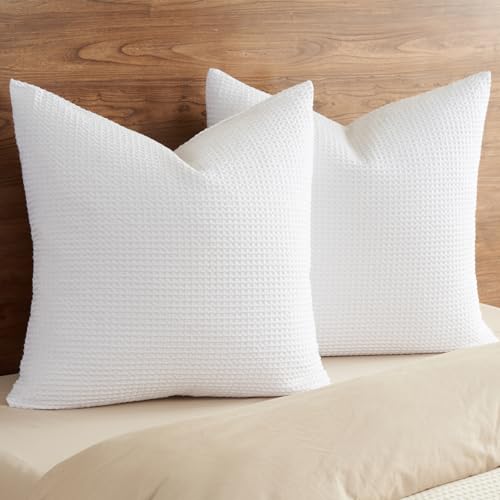
The PHF covers show the softer side of cotton, using a pure cotton waffle weave in a large Euro square format. Waffle weave creates a three-dimensional grid of small pockets across the surface, which adds texture through structure rather than through slubbed yarns, so the pillow looks textured while still feeling soft and even against the face and arms. That makes this style especially comfortable on beds, where Euro pillows serve as backrests for reading, and on sofas used for napping. The cotton is pre-washed according to the maker, and the fabric weight gives the covers a substantial, cushioned feel that holds the waffle pattern after washing. Care follows typical cotton guidance: wash cold with similar colors and dry flat or on low heat to protect the weave shape. Compared with linen, the waffle cotton looks cozier and more uniform, with a spa-like quality that suits calm bedrooms. The larger Euro size needs matching inserts, so measurements matter before ordering. For anyone who likes texture but dislikes the crisp hand of linen, waffle cotton is the natural middle path.
How to choose
Start with the room and the routine. For a formal or tidy look that survives daily use, cotton canvas is the safer fabric: it washes easily, looks smooth, and resists the creasing that defines linen. For a relaxed, layered look in a living room or guest bed, linen adds texture that smooth fabrics cannot copy, and its fibers are naturally strong, so covers keep their structure over years of use. Consider touch next. Linen feels dry and slightly crisp at first and softens slowly with washing, while cotton feels soft immediately and stays consistent. Consider light and color as well: linen often comes in muted, earthy tones that suit natural palettes, while cotton covers appear in a wider range of dyed colors and prints. Check the closure and the sizing on any cover, since a hidden zipper gives a cleaner finish and a cover matched closely to the insert size gives a fuller shape. Finally, think about mixing: many well-styled sofas combine both fabrics, using linen for texture at the back and cotton for comfort at the front, which captures the strengths of each.
Who should skip
Skip linen covers if visible wrinkles bother you, if the household iron rarely comes out, or if pillows will be washed very frequently, because repeated hot washing and high heat drying are harder on linen styling than on cotton. Skip smooth cotton canvas if the goal is a richly textured, organic look, since its uniform surface can read plain next to rustic wood, woven throws, or linen curtains. Skip the large Euro format in either fabric if only standard inserts are on hand, because an oversized cover on a small insert looks deflated. Anyone wanting a completely maintenance-free decorative pillow may prefer to skip removable covers entirely and choose a finished pillow instead, accepting less flexibility when seasons or colors change.
FAQ
Does linen or cotton last longer for throw pillow covers?
Both fabrics are durable, but they age differently. Linen fibers are naturally strong and covers tend to keep their structure, softening over time without thinning quickly. Cotton canvas is also tough and tolerates frequent washing well, while softer cotton weaves can show wear sooner at the corners. Lifespan depends more on weave quality and washing habits than on the fiber name alone.
Which fabric is easier to wash, linen or cotton?
Cotton is generally easier because most cotton covers tolerate regular machine washing and low tumble drying with simple care. Linen covers usually prefer gentle cycles, cool water, and air drying or low heat to limit shrinkage and keep the texture even. Always follow the care label on the specific cover, since blends and dyes change the safest routine.
Do linen pillow covers wrinkle more than cotton?
Yes. Wrinkling is a normal trait of linen and part of its relaxed appearance, and creases appear after washing and during everyday use on a sofa. Cotton, especially canvas and waffle weaves, holds a smoother finish with far less effort. A quick steam or a low iron can tidy linen when a sharper look is wanted for guests.
Can linen and cotton covers be mixed on one sofa?
Mixing is common and often looks better than a single fabric. A practical approach is linen covers in larger sizes at the back or ends of the sofa for texture, with cotton covers in front where arms and heads rest. Keeping the color family consistent ties the mix together while the different surfaces add depth.
Final verdict
Linen wins on texture, character, and long-term fiber strength, and it suits relaxed rooms where a few creases look intentional. Cotton wins on softness from day one, simpler washing, and a neater finish for beds and busy family sofas. The Foindtower and MIULEE blends soften the linen experience, the DEZENE set adds woven stripe detail, the Woven Nook canvas pack covers a whole sofa with durable cotton, and the PHF waffle covers deliver cotton comfort with real texture. Choose by room routine first, and let the fabric follow.
FAQ
Does linen or cotton last longer for throw pillow covers?
Which fabric is easier to wash, linen or cotton?
Do linen pillow covers wrinkle more than cotton?
Can linen and cotton covers be mixed on one sofa?
More from Amazon
Programs that pair well with the guide above. Offers and eligibility are set by Amazon and may change.
Free shipping on eligible items, Prime Video and more. Eligible new members can start with a free trial.
Start a Prime free trialAudiobooks and podcasts to listen to on the go. Eligible new members can start with a free trial.
Try Audible freeAd-free music streaming. Eligible new subscribers can start with a free trial.
Try Music Unlimited freeA free business account with business pricing and bulk-buying tools for work, shop or home office.
Create a business accountAs an Amazon Associate we earn from qualifying purchases.




Write Your Review
No reviews yet. Be the first to share your experience!